

Pinfeed / Strategy / Your Best Customer Might Never Visit Your Website Again
 Strategy
Your Best Customer Might Never Visit Your Website Again
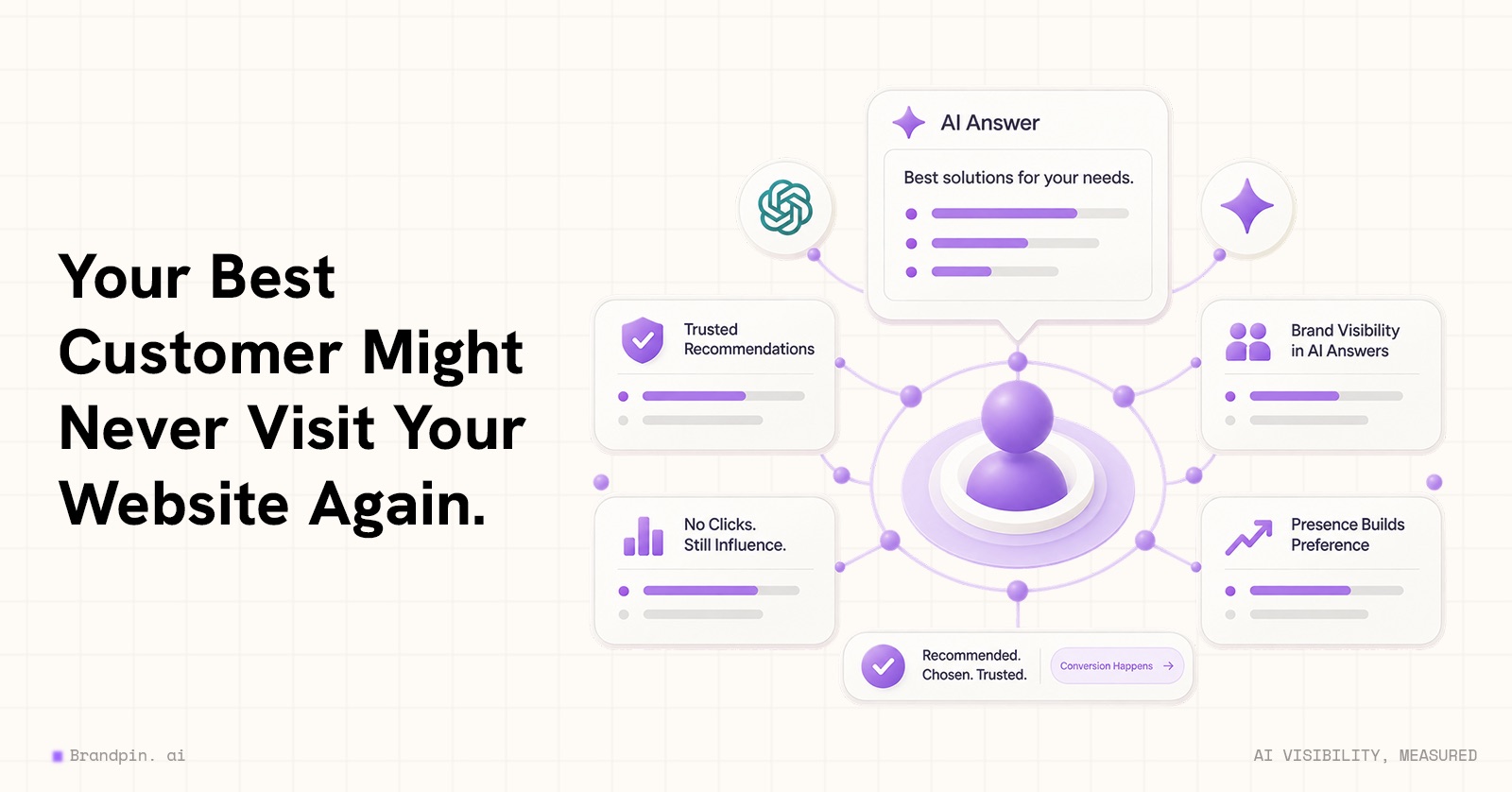
Buyers are increasingly discovering brands inside ChatGPT, Gemini, and Claude before they ever reach a website. If your brand is named there, the website visit becomes the next step, not the first. A buyer in 2026 does not always start with your homepage. They ask ChatGPT which tool fits their use case, compare options inside Gemini, and use AI-generated answers to narrow the category before opening a single brand website.
By the time they visit your site, the shortlist may already be formed. And sometimes, the website visit never happens at all. That does not automatically mean the brand lost. If the brand was named, recommended, or cited inside the AI answer that shaped the decision, it may already have cleared the first stage of consideration. This is exactly why BrandPin AI was built, to make AI visibility measurable before website analytics ever get a chance to record the buyer.
The Zero-Visit Customer Is Already Here
The traditional digital journey looked simple: search, click, browse, compare, convert. AI changes that order. A buyer can now ask a detailed question and receive a direct recommendation without moving through a conventional search results page first. That means the website still matters, but it is no longer always the first place the brand is evaluated.
The AI answer increasingly becomes that first layer. If your brand appears in the answer, you enter the buyer’s consideration set before they visit your site. If your competitor appears and you do not, the buyer may never reach you at all.
This is where AI brand visibility becomes important. Traditional SEO tools can show where your website ranks. They cannot show whether ChatGPT, Gemini, or Claude actually mentioned your brand when a buyer asked which company to consider. That is the gap an AI visibility tool needs to measure.
Being Named Is Becoming the New Click
For years, clicks were one of the clearest signs that discovery had worked. AI introduces another signal before the click: the mention. When a brand is named inside a recommendation, it has already crossed an important decision threshold. The AI platform has associated that brand with the buyer’s question strongly enough to include it in the answer.
That makes metrics such as Share of Voice, Citation Rate, Recommendation Rate, and Model Voice increasingly important. BrandPin AI tracks Share of Voice as a brand’s share of mentions compared with competitors, Citation Rate as how often AI answers cite the brand’s own website, and Model Voice as presence across ChatGPT, Gemini, and Claude. Every metric is tied back to the real stored AI answer behind it.
These signals answer a question traditional analytics cannot: Was the brand considered before the website visit ever happened? For marketing and growth teams, that question is becoming just as important as traffic.
The Website Still Matters, But Its Role Is Changing
The implication is not to deprioritise the website. The website still explains products, services, positioning, proof, and differentiation. It still supports conversion. It still provides information that search engines and AI systems can discover and interpret. But the website now needs to work in two directions. It has to persuade the buyer who visits.
And it has to make the brand understandable enough for AI systems to mention, cite, and recommend before the visit. That means clearer category language, stronger factual content, direct answers to buyer questions, and better structured information. This is where Generative Engine Optimization becomes important.
A traditional SEO tool helps brands understand rankings and search performance. A GEO tool or AI visibility tool needs to show whether the brand is actually appearing in AI-generated answers. The goal is not simply to rank a page. It is to become visible inside the answers buyers increasingly rely on.
AI Visibility Happens Before Website Analytics Can See It
Traditional analytics starts when someone reaches your website. AI visibility often happens before that moment. A buyer may ask: “Which AI visibility platform should I use to track how my brand appears in ChatGPT and Gemini?”
An AI engine may recommend three options. If your brand is one of them, the buyer already knows your name before visiting your website. If it is not, your analytics dashboard records nothing. No session. No click. No indication that a potential customer considered the category and never encountered you. That is why AI visibility monitoring needs to happen at the answer level.
BrandPin AI runs real buyer-style queries across ChatGPT, Gemini, and Claude, captures the raw responses, and shows whether the brand appears, whether it is recommended, whether its own website is cited, and which competitors appear instead. That is the difference between tracking website activity and tracking the decision that happened before the website.
Start Measuring Before the Visit Disappears
AI search is not replacing websites. It is changing when buyers encounter them. The new journey can begin inside an AI answer. A recommendation creates awareness. A comparison creates consideration. A citation creates credibility. Only then might the buyer visit the website. That means AI visibility is becoming a parallel measurement discipline alongside traditional SEO.
BrandPin AI helps brands track that layer through AI Visibility Score, Share of Voice, Citation Rate, and Model Voice across ChatGPT, Gemini, and Claude, with every number linked to the actual AI answer behind it.
Your best customer might never discover you through a blue link. They might hear your name first from the AI helping them decide. The question is whether your brand was in the answer. See where your brand stands in AI answers. Run your free BrandPin AI scan.
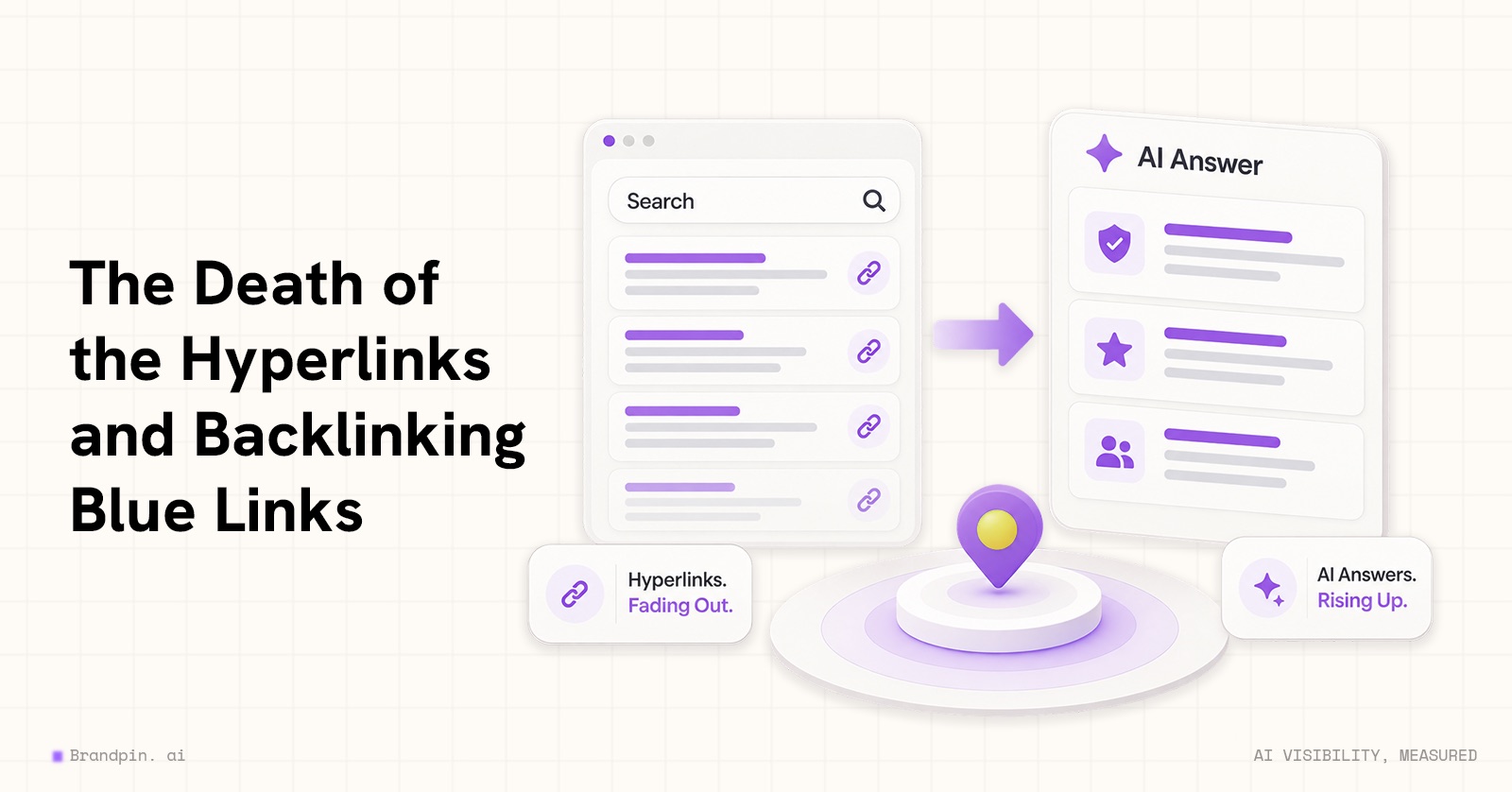
The Death of the Blue Link: What Changes When Buyers Stop Searching and Start Asking
Backlinks built search rankings. AI search works differently. Learn how BrandPin AI tracks AI visibility, citations, share of voice, and brand presence across ChatGPT, Gemini, and Claude.
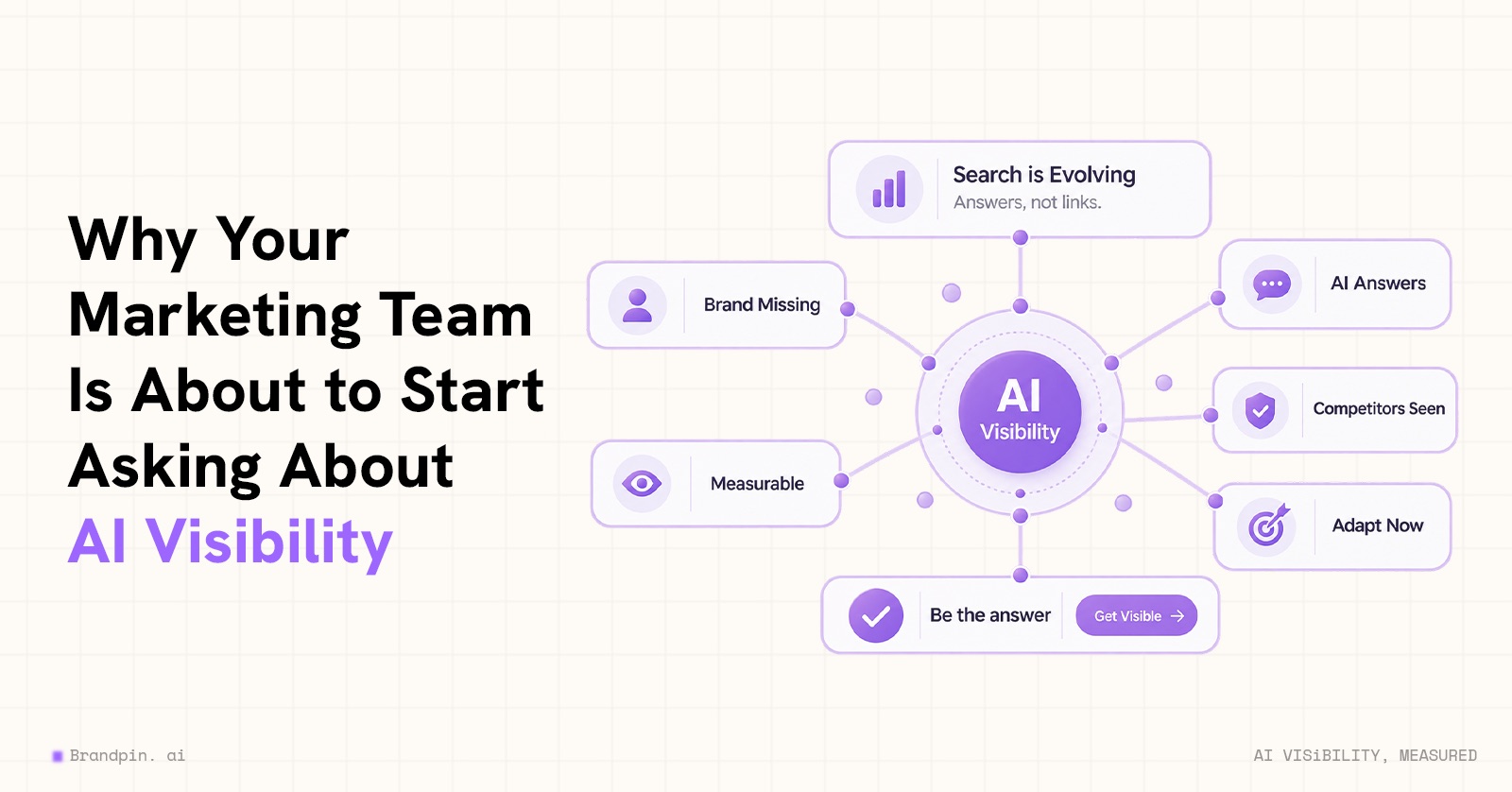
Why Marketing Teams Need an AI Visibility Strategy in 2026
AI visibility tracks whether ChatGPT, Gemini, and Claude recommend your brand. Here's why marketing teams need to start measuring it in 2026.
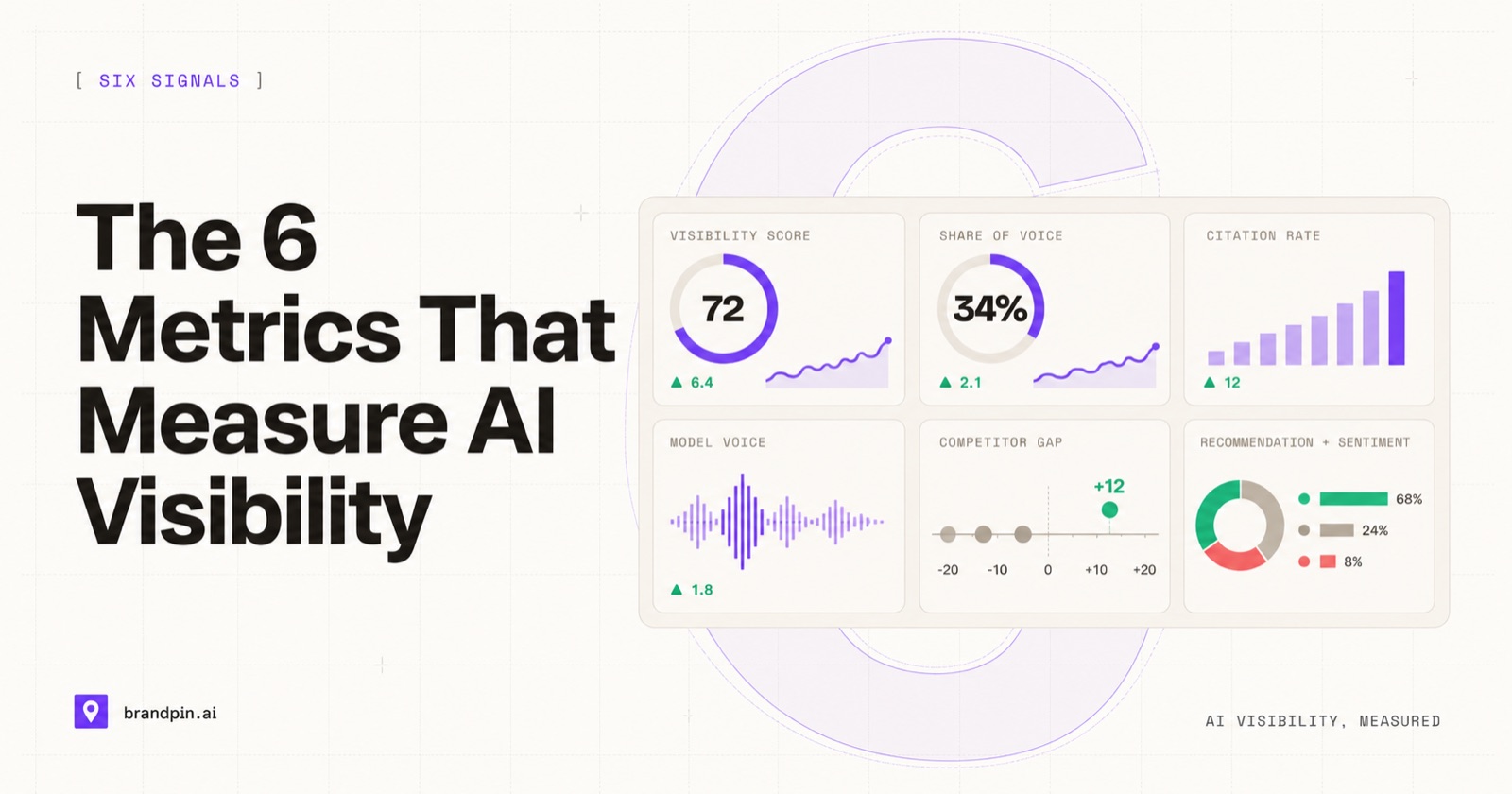
Share of Voice, Citation Rate, Model Voice: The 6 Metrics That Actually Measure AI Visibility
The six metrics that measure AI visibility, what each one tracks, and why a single score hides where a brand is losing.