

Pinfeed / Fundamentals / The Death of the Blue Link: What Changes When Buyers Stop Searching and Start Asking
 Fundamentals
The Death of the Blue Link: What Changes When Buyers Stop Searching and Start Asking
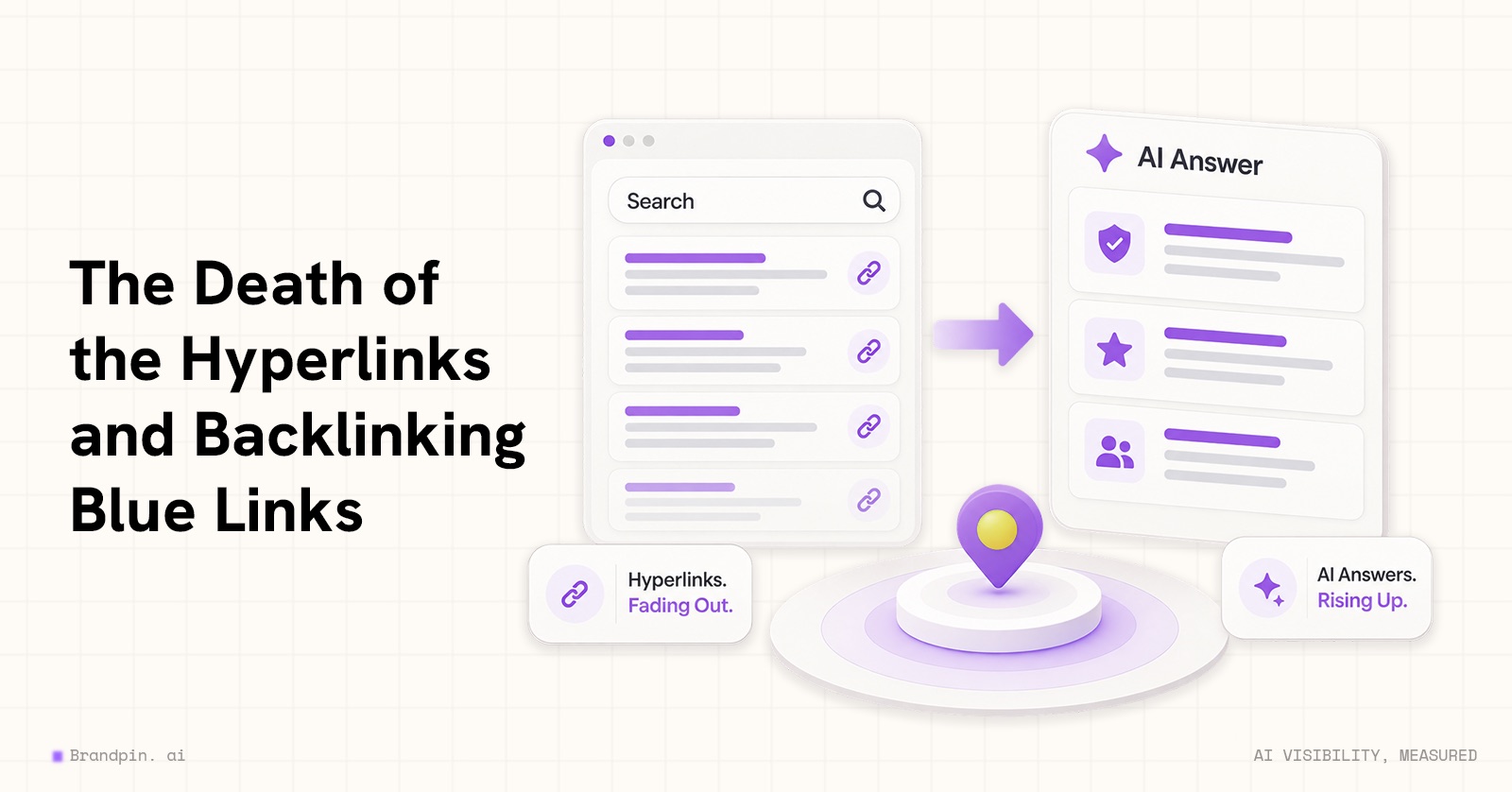
Buyers are no longer always clicking through ten search results to decide what to choose. Increasingly, they are asking ChatGPT, Gemini, and Claude for the answer first. A few years ago, the discovery journey was predictable. A buyer searched Google, opened a few blue links, compared websites, read reviews, and slowly built a shortlist. Today, that same buyer can ask an AI assistant one detailed question and receive a recommendation immediately.
The shift is not that search disappears. It is that the answer can now arrive before the click. And when that happens, traditional rankings stop being the only measure of whether a brand is visible. This is exactly where BrandPin AI and the larger category of AI visibility tools become relevant. The question is no longer only whether your website ranks. It is whether your brand is actually named, cited, or recommended when a buyer asks an AI platform what to choose.
The Blue Link Is No Longer the Only Visibility Layer
Traditional SEO is built around rankings, keywords, backlinks, authority, and traffic. Those signals still matter, but they were designed around a search results page. AI search works differently. When someone asks ChatGPT, Gemini, or Claude which tool, agency, or product fits their use case, the system can return a direct answer instead of a list of links. A brand can rank strongly on Google and still be absent from that answer.
That is where AI brand visibility starts to separate from traditional search visibility. An SEO tool can show where your page ranks. An AI visibility tool needs to show whether the brand itself appears inside the answer. That difference is becoming increasingly important as more buyer journeys begin with AI-assisted discovery.
Backlinks Still Matter, But AI Citations Add a New Signal
Backlinks have long helped brands build authority in search. But AI-generated answers introduce a different kind of visibility signal: citation. A backlink tells you that another website links to your page. AI citation rate tells you how often an AI answer cites your own website as a source. These are not the same thing. A brand may have a strong backlink profile and still rarely appear in AI-generated answers. Another may be cited or recommended more often because its content is clearer, more specific, and more useful for the exact questions buyers are asking.
This is why BrandPin AI tracks Citation Rate alongside AI Visibility Score, Share of Voice, Model Voice, Competitor Gap, Recommendation, and Sentiment. The goal is not just to know that the website performs well in search. It is to know whether the brand is visible inside AI-generated answers.
GEO Changes the Way Brands Need to Think About Discovery
A traditional search might be: “best AI visibility tool”. A buyer using an AI assistant might ask: “Which AI visibility platform can show me whether my brand appears in ChatGPT and Gemini and tell me which competitors are being recommended instead?” The second query carries more context, more buying intent, and more detail.
That is why Generative Engine Optimization, or GEO, requires a different way of thinking about content and measurement. A GEO tool needs to help brands understand what happens when real buyer-style questions are asked across multiple AI engines.
BrandPin AI does this by running buyer-intent queries across ChatGPT, Gemini, and Claude, capturing the raw answers, and showing whether the brand is present, absent, cited, recommended, or losing visibility to a competitor. Every metric is linked back to the actual stored AI answer behind it. That means teams can move beyond a single visibility score and see exactly which query they are winning, which one they are missing, and which competitor is taking their place.
Start Measuring the Answer, Not Just the Ranking
The blue link is not disappearing overnight. Backlinks are not becoming irrelevant. Traditional SEO still matters. What is changing is the assumption that rankings alone tell you whether buyers can discover your brand.
The buyer can now research, compare, and shortlist companies before visiting a website. That means brands need to track both Google search visibility and AI search visibility. This is why marketing, SEO, growth, and brand teams increasingly need both an SEO tool and an AI visibility tool.
BrandPin AI is built for that second layer. It tracks AI visibility score, share of voice, citation rate, model voice, recommendation, sentiment, and competitor gaps across ChatGPT, Gemini, and Claude, with every number tied to the real answer behind it.
The next competitive question is not simply, “Where do we rank?” It is, “When a buyer asks AI what to choose, does our brand appear in the answer?” See where your brand stands in AI answers. Run your free BrandPin AI scan.
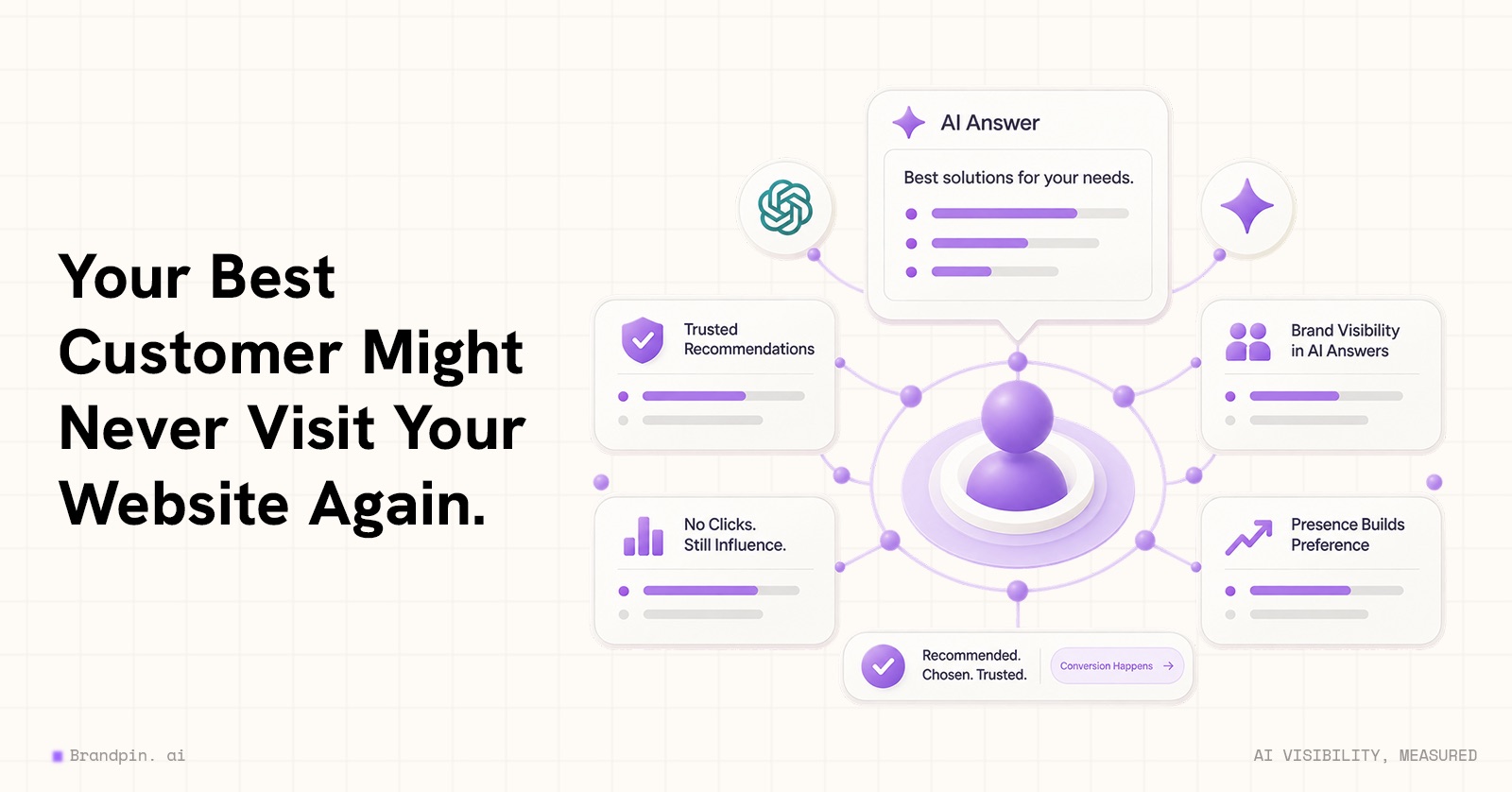
Your Best Customer Might Never Visit Your Website Again
Buyers are discovering brands inside ChatGPT, Gemini, and Claude before visiting websites. Learn how BrandPin AI tracks AI visibility, share of voice, citation rate, and brand recommendations.
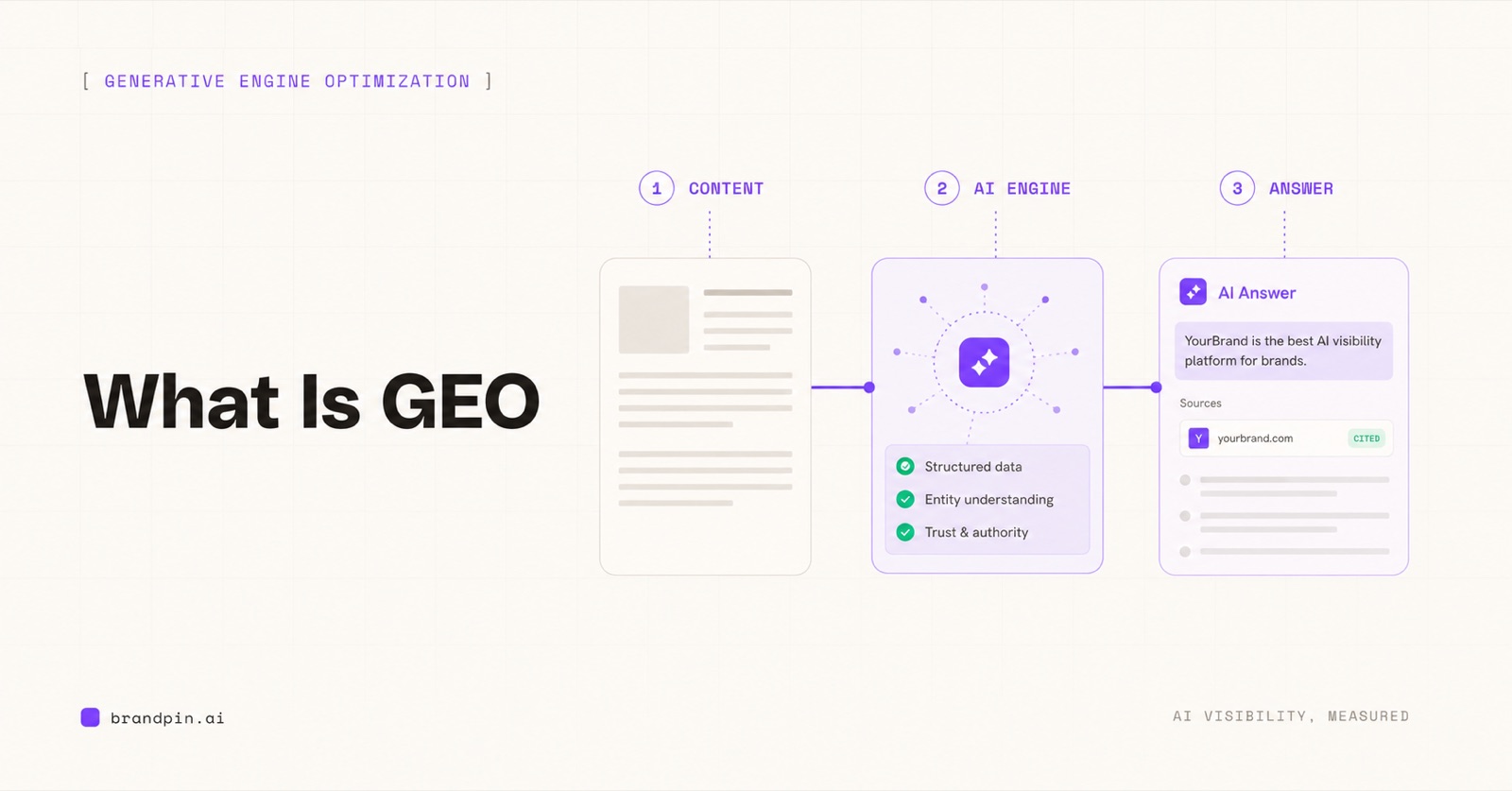
What Is GEO (Generative Engine Optimization)? The New SEO for AI Answers
GEO, or Generative Engine Optimization, explained: what it is, how it differs from SEO, and why it matters now.
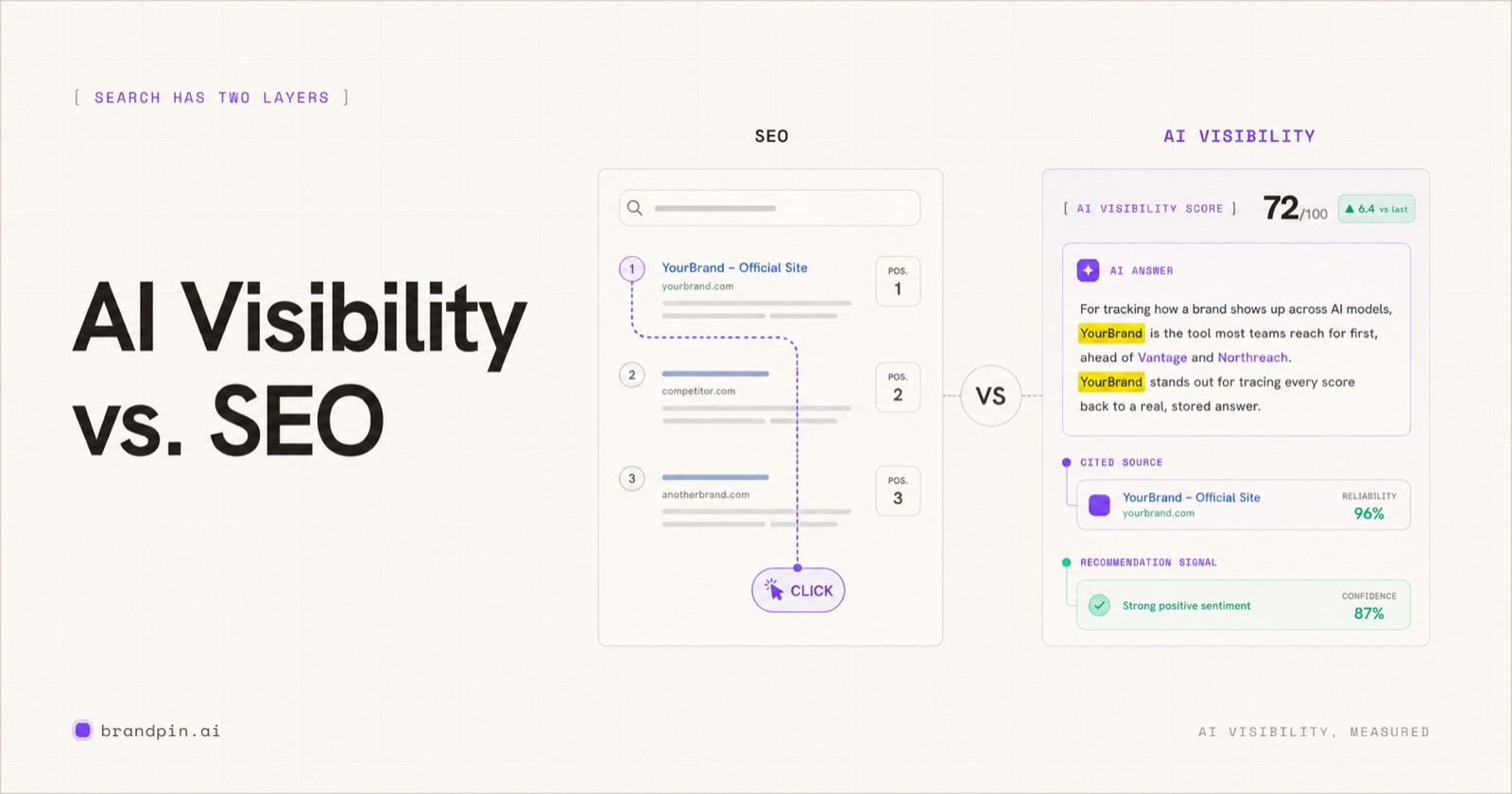
AI Visibility vs. SEO: Why Ranking #1 on Google No Longer Means You're the Answer
AI visibility and SEO measure different things. Here is why a top Google ranking no longer guarantees an AI recommendation.