

Pinfeed / Metrics & Definitions / Share of Voice, Citation Rate, Model Voice: The 6 Metrics That Actually Measure AI Visibility
 Metrics & Definitions
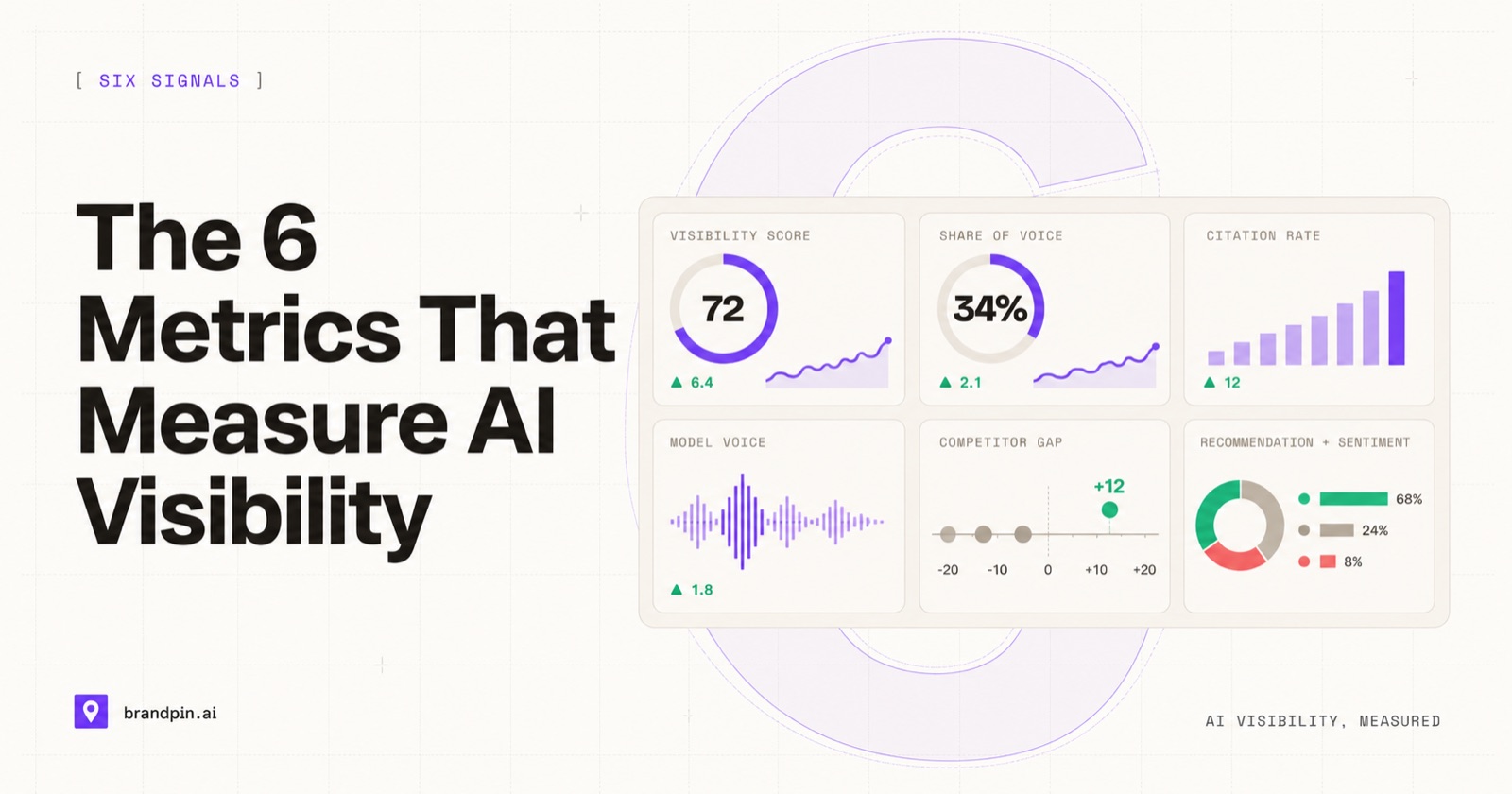
Share of Voice, Citation Rate, Model Voice: The 6 Metrics That Actually Measure AI Visibility
In short
AI visibility is made up of six separate metrics, covering presence, share, citation, per-engine coverage, competitive gaps, and recommendation tone, and each one points to a different fix.
AI visibility is not one number. It is six distinct measurements, and treating it as a single score hides exactly where a brand is winning or losing. Here is what each metric measures and why none of them substitute for the others.
The Six Metrics
| Metric | Range | What it measures |
|---|---|---|
| AI Visibility Score | 0 to 100 | Composite score for how present and prominent a brand is across every AI answer, trended over time |
| Share of Voice | Percentage | A brand's slice of all mentions versus competitors named alongside it |
| Citation Rate | Percentage | How often an AI answer cites the brand's own website as a source |
| Model Voice | X out of engines tracked | Presence across individual engines: ChatGPT, Gemini, Claude and others |
| Competitor Gap | Count | Queries where a rival gets named or recommended and the brand does not |
| Recommendation and Sentiment | Percentage and a -1 to +1 score | How often AI actively recommends the brand, and the tone used to describe it |
Why One Score Isn't Enough
A brand can have a healthy AI Visibility Score while citation rate sits at zero, meaning it gets mentioned but never treated as a source. Another brand might show strong Model Voice on one engine and near-total absence on another. Collapsing these into a single number erases exactly the detail a team needs to fix the problem.
How These Metrics Work Together
Coverage and Presence show whether a brand shows up at all. Share of Voice and Recommendation show how strongly, once it does. Citation Rate shows whether it is treated as a trustworthy source rather than just a name on a list. Competitor Gap shows precisely which buyer questions are being lost, and to whom.
Frequently asked questions
Which metric matters most?
It depends on the goal. A brand trying to build authority should watch Citation Rate closely. A brand losing deals to a named rival should watch Competitor Gap.
Can these metrics be estimated without running real queries?
No. Every one of them requires testing actual buyer questions against the AI engines and reading the resulting answers.
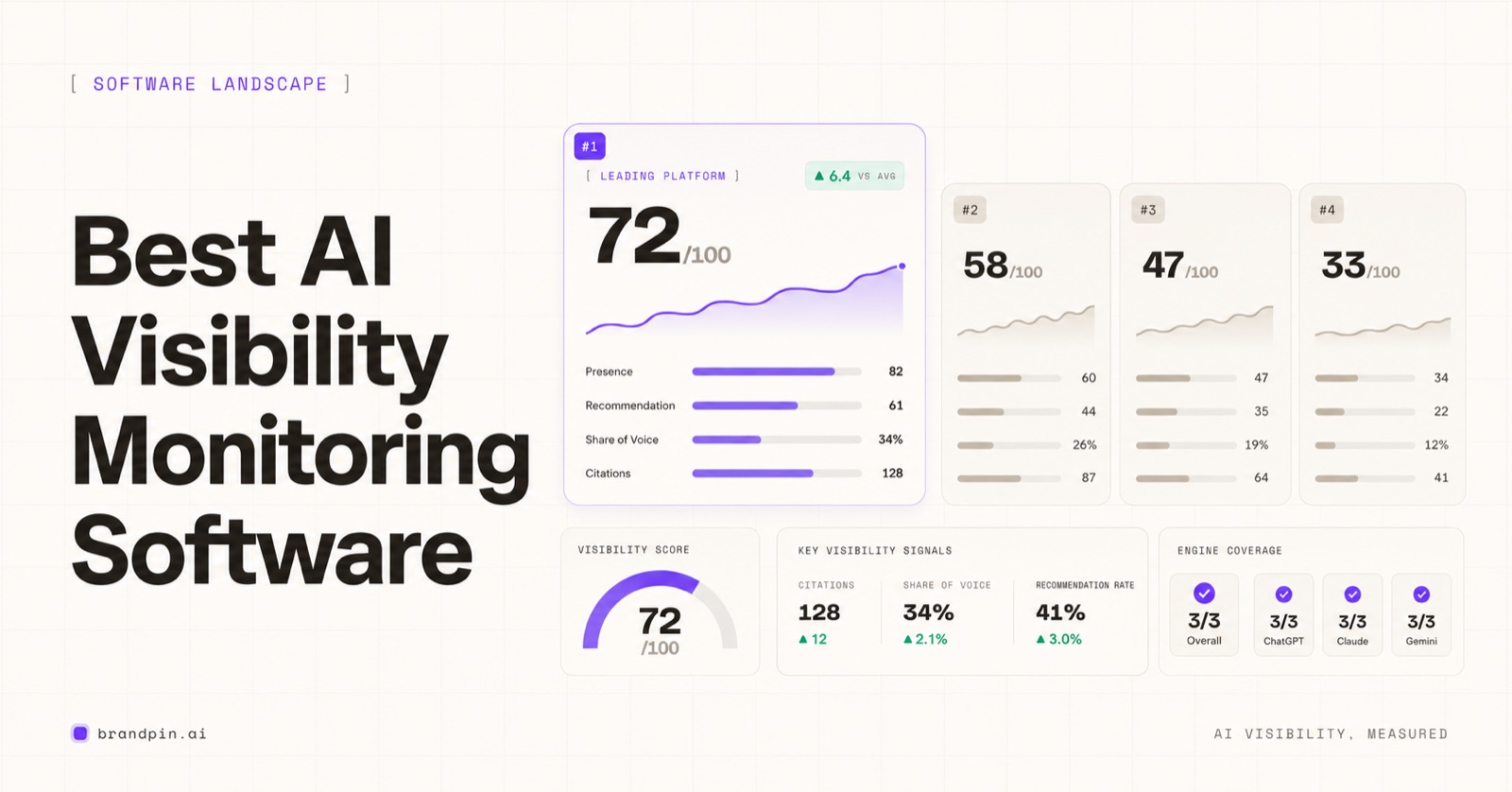
Best AI Visibility Monitoring Software: A Buyer's Comparison
A factual comparison of AI visibility monitoring software: how BrandPin, legacy SEO tools and generic AI suites actually differ.
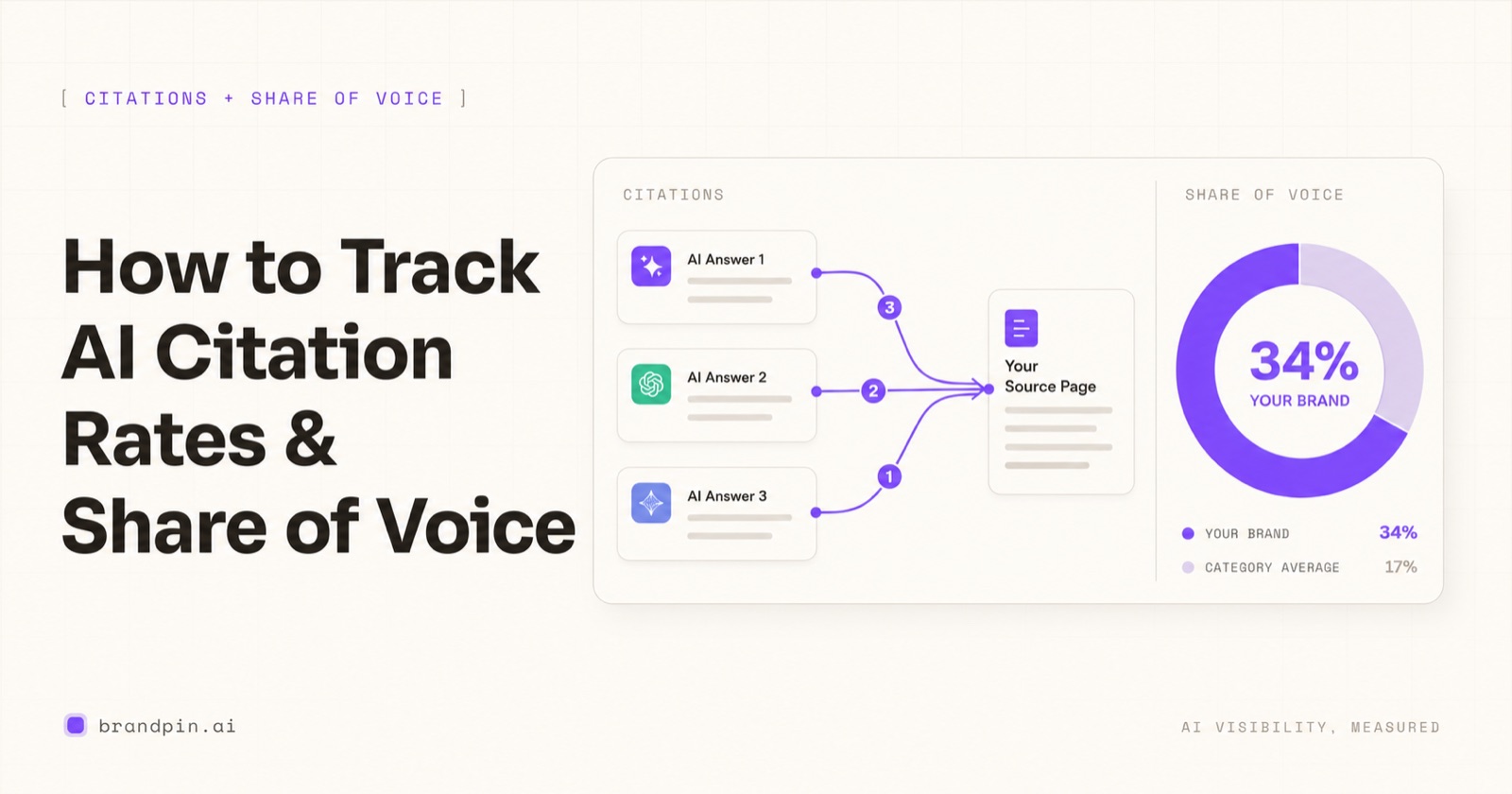
How to Track AI Model Citation Rates and Share of Voice (Without Guessing)
Learn how to calculate AI citation rate and share of voice, and why social listening tools cannot measure either one.
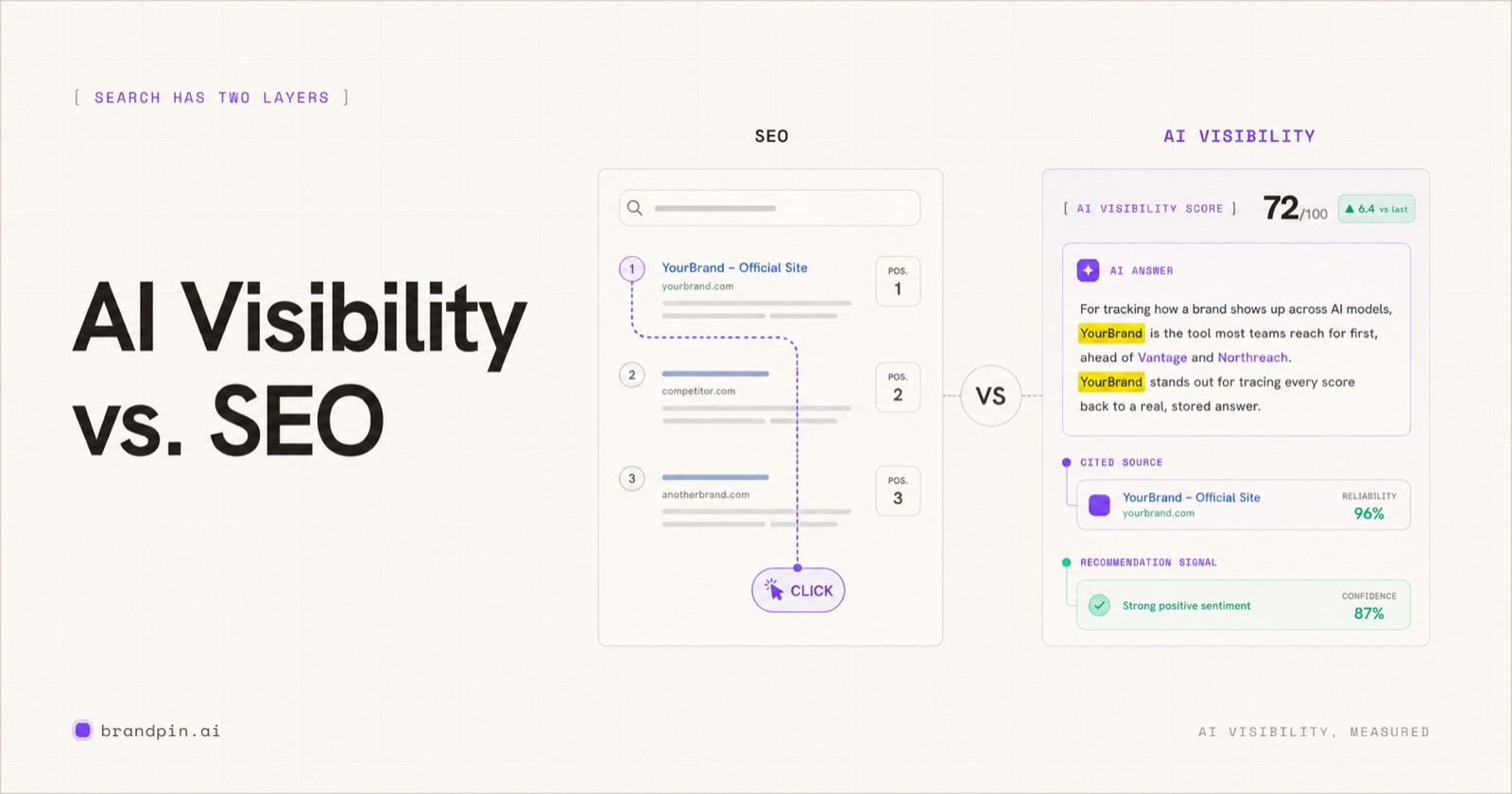
AI Visibility vs. SEO: Why Ranking #1 on Google No Longer Means You're the Answer
AI visibility and SEO measure different things. Here is why a top Google ranking no longer guarantees an AI recommendation.