

Pinfeed / Strategy / Why Marketing Teams Need an AI Visibility Strategy in 2026
 Strategy
Why Marketing Teams Need an AI Visibility Strategy in 2026
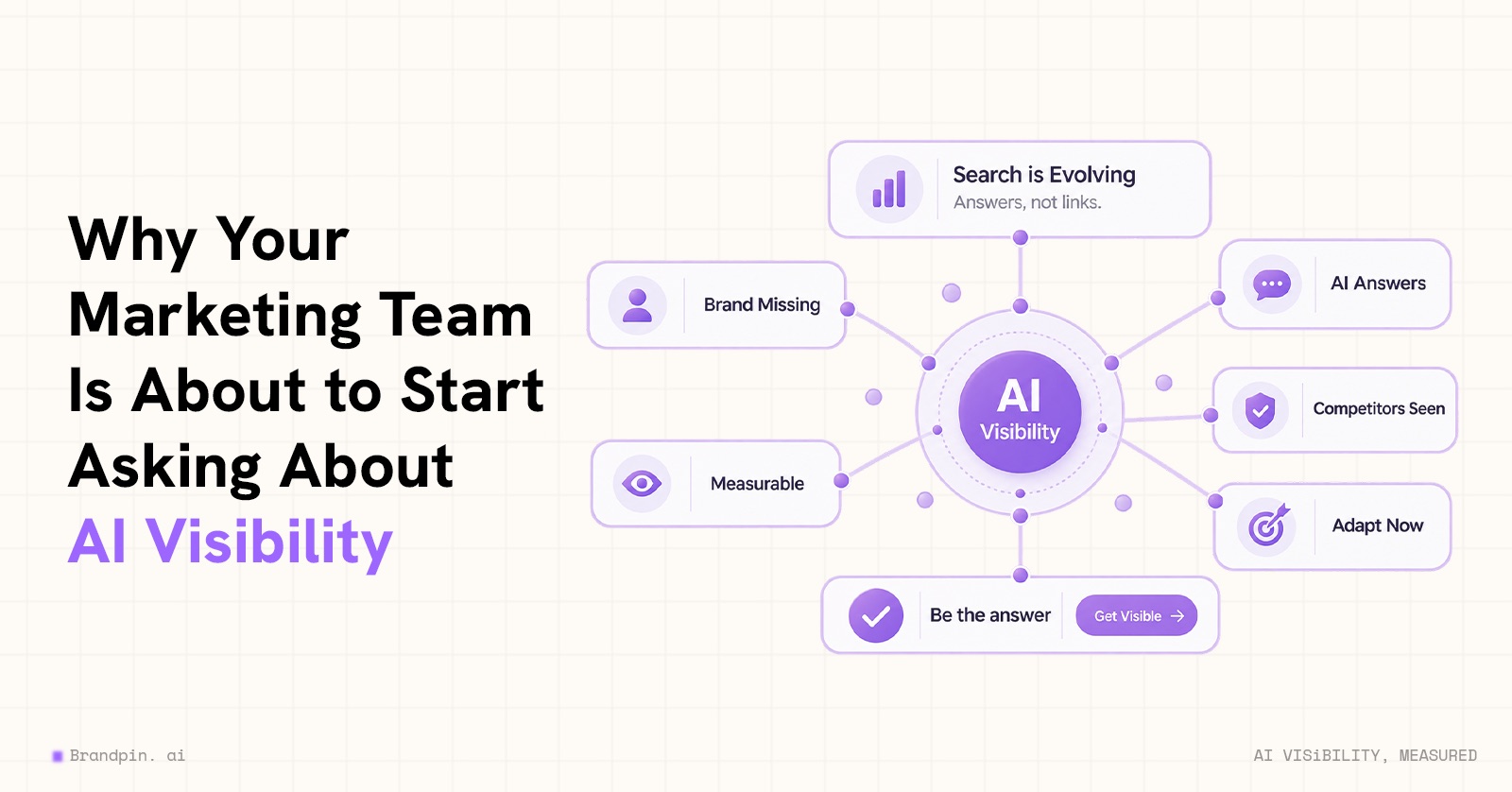
Buyers are getting brand recommendations from ChatGPT and Gemini before they open a single browser tab. If AI names you there, the website visit becomes the last step, not the first.
A new question is showing up in marketing meetings this year, and it has nothing to do with rankings. When someone opens ChatGPT, Gemini, or Claude and asks which brand to choose in your category, does your brand actually show up in the answer? Not "are we ranking on Google." Not "what is our domain rating." Specifically: is your brand named, cited, or recommended when a buyer asks an AI assistant for advice? That question is what AI visibility measures, and it is quickly becoming the metric marketing teams cannot afford to ignore. This is the reason we have developed BrandPin AI to make tracking easy and measurable.
Buyers Have Already Moved to AI Search
The shift is not theoretical. According to SparkToro and Datos, a growing majority of searches in 2026 end without a single click to a website, and a significant share of that traffic is buyers asking AI assistants directly for recommendations, comparisons, and buying advice before they ever open a search results page. A brand can dominate page one of Google and still be structurally absent from ChatGPT, Gemini, and Claude answers for the exact same query. Ranking and being recommended are no longer the same outcome, and treating them as one is where brand visibility in AI search starts to break down.
AI Search Demands a Different Strategy
Traditional SEO tools were not built to answer this question. Semrush and Ahrefs will tell you where a page ranks. They will not tell you whether an AI engine named your brand when a buyer asked for the best option in your space. That is the core problem we are treating with AI Visibility tool - BrandPin AI. A brand can rank number one on Google and still have a 38% chance of being invisible inside ChatGPT's answer for the same query. Understanding how ChatGPT chooses which brands to recommend, largely a function of what is already published, structured, and citable, is the starting point for closing that gap. This is the reason BrandPin AI- GEO tool, is being used by marketing and development teams across the world.
What an AI Visibility Tool Actually Needs to Show You
AI visibility monitoring is becoming its own serious category, distinct from SEO tracking. A tool worth using does three things well: it runs real buyer-style questions against multiple AI engines, it shows exactly which engine named the brand and which did not, and it traces every result back to the real AI answer behind it. A single opaque score tells you nothing you can act on. A per-engine, per-query breakdown, the kind that reports share of voice, citation rate, and where brand mentions in AI answers are happening, is what marketing and growth teams can actually build a plan around.
That is also how you catch a competitor quietly gaining ground on queries your brand used to own. Without that level of visibility, the gap compounds in silence.
Start Measuring Before the Gap Compounds
AI recommendation patterns are not random. They are built on what a brand has already published, cited, and structured for AI comprehension, which means the brands that start tracking and improving their AI visibility score now will hold a compounding advantage over the ones that wait. This is the future of SEO in the AI era: not a replacement for classic SEO, but a parallel discipline that needs its own measurement, its own strategy, and its own owner on the marketing team.
Tools like BrandPin AI exist precisely to close that gap, tracking AI visibility score, share of voice, and citation rate across ChatGPT, Gemini, and Claude, with every number tied to the real AI answer behind it. The brands not measuring it are not just behind. They are invisible in a channel they cannot even see.
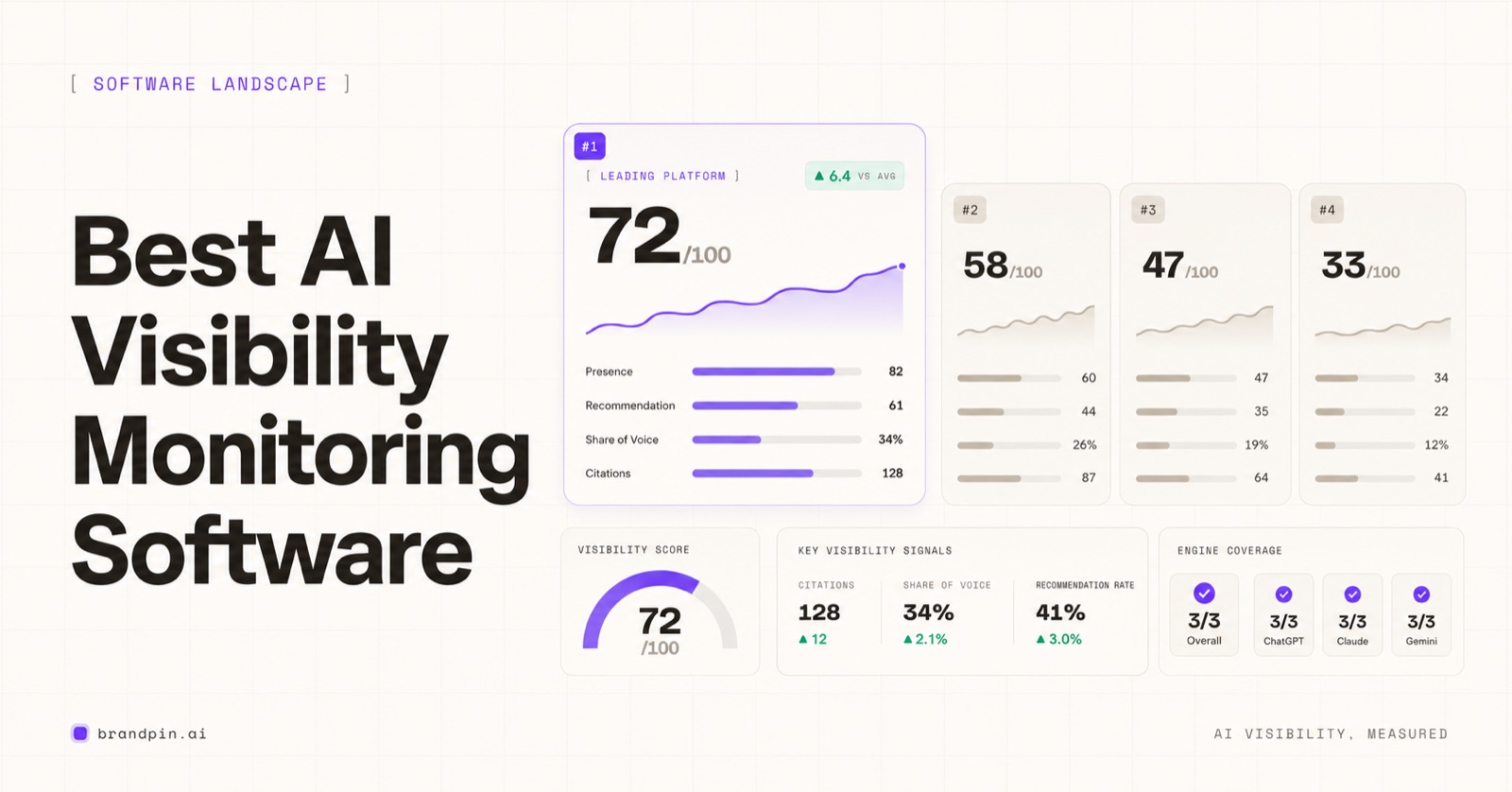
Best AI Visibility Monitoring Software: A Buyer's Comparison
A factual comparison of AI visibility monitoring software: how BrandPin, legacy SEO tools and generic AI suites actually differ.
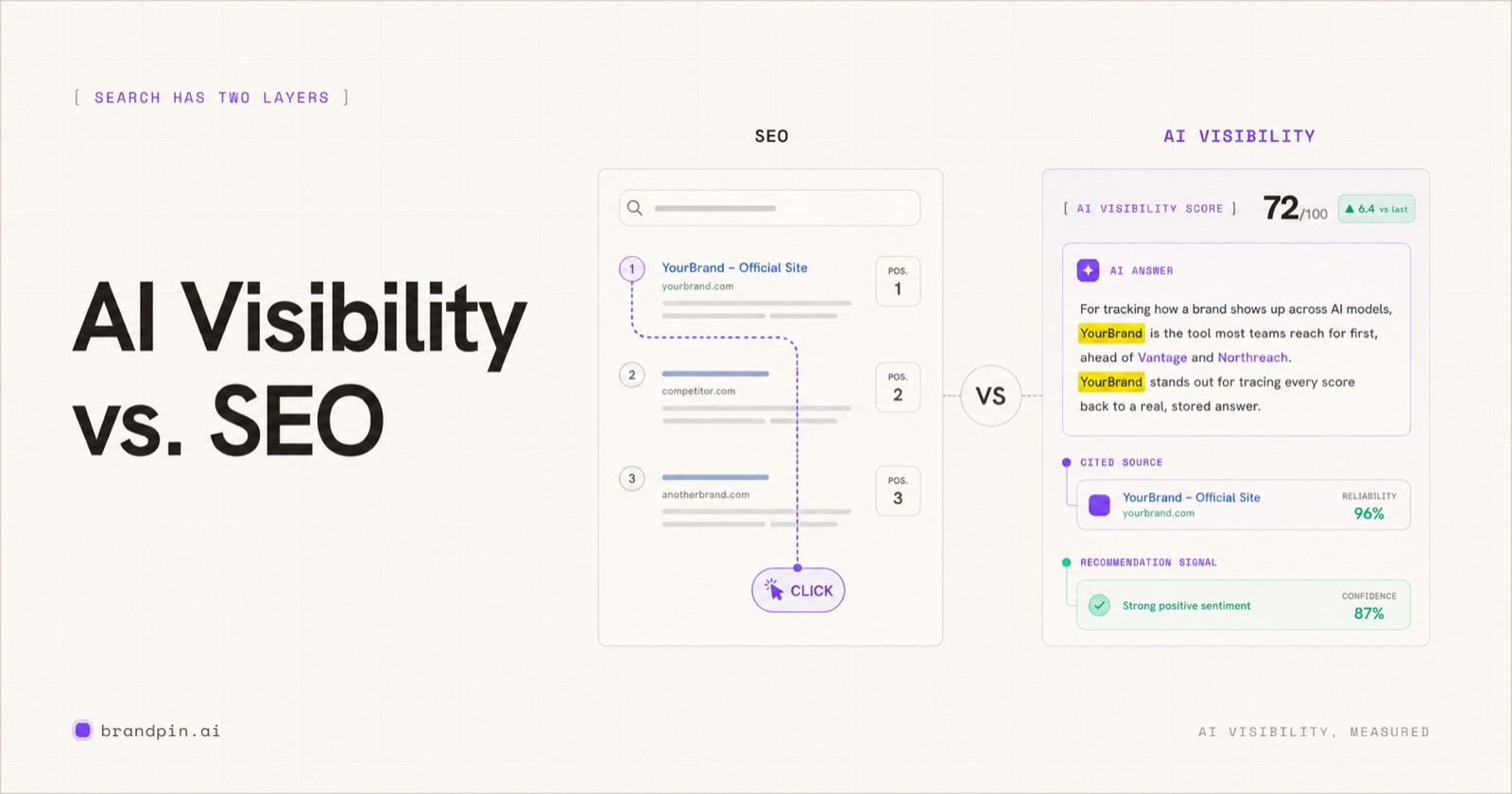
AI Visibility vs. SEO: Why Ranking #1 on Google No Longer Means You're the Answer
AI visibility and SEO measure different things. Here is why a top Google ranking no longer guarantees an AI recommendation.
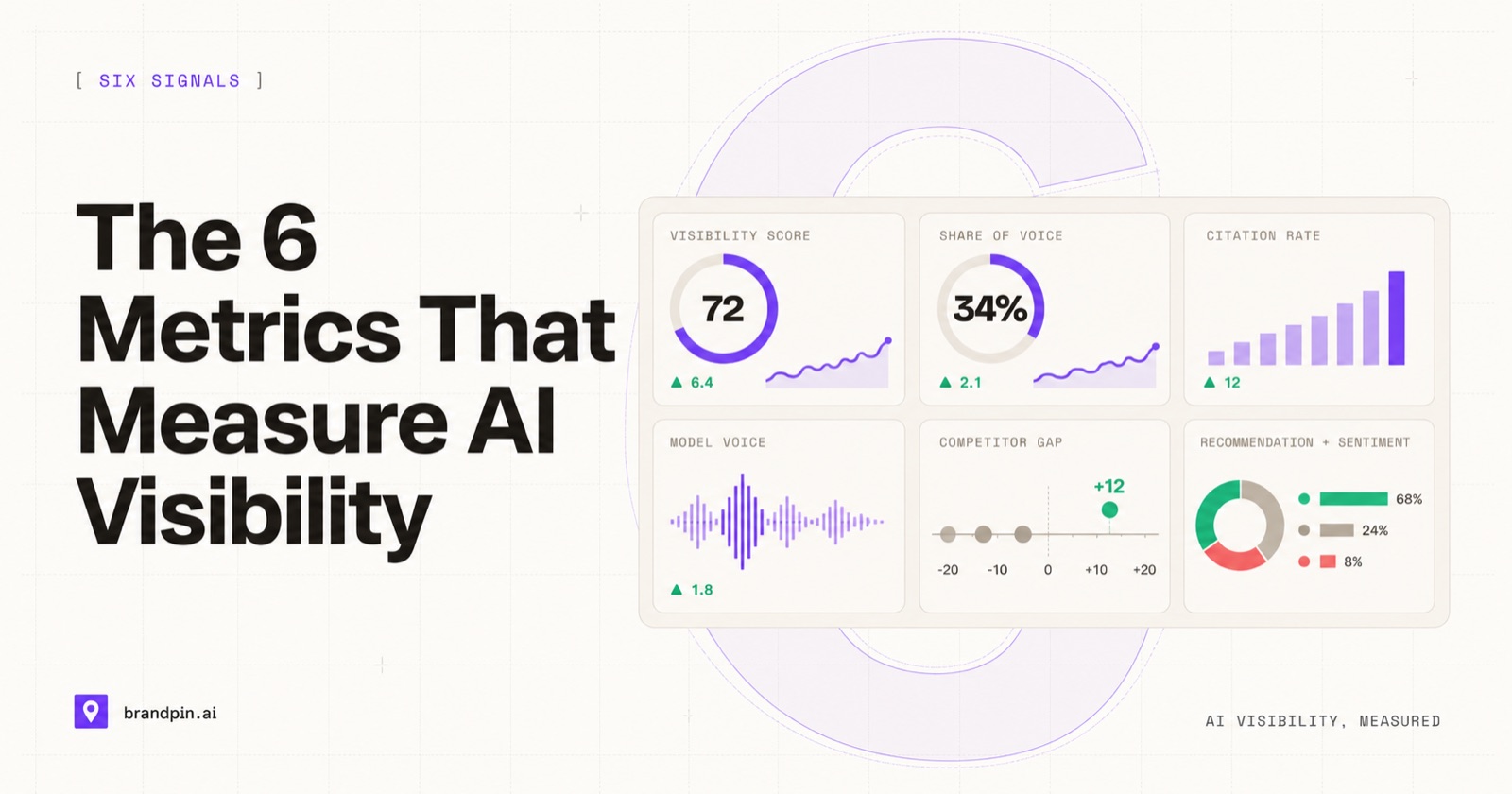
Share of Voice, Citation Rate, Model Voice: The 6 Metrics That Actually Measure AI Visibility
The six metrics that measure AI visibility, what each one tracks, and why a single score hides where a brand is losing.