

Pinfeed / Brand Risk / What Happens When AI Gets Your Brand Wrong
 Brand Risk
What Happens When AI Gets Your Brand Wrong
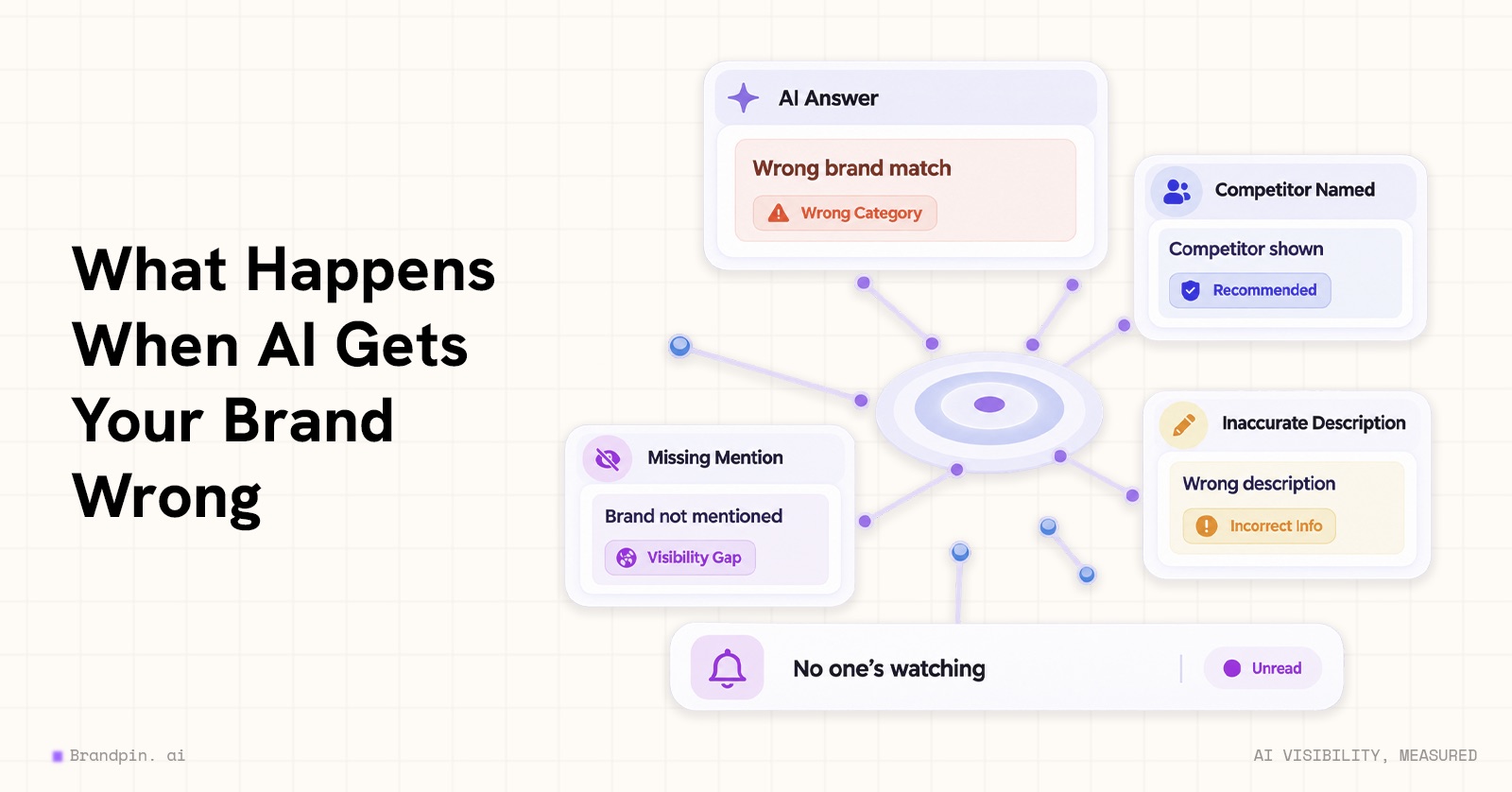
AI platforms are answering questions about your brand every day. Some answers are wrong. Most brands have no system to find out which ones. A new brand risk is emerging, and most teams are not tracking it yet. When someone opens ChatGPT, Gemini, or Claude and asks which brand to choose, what a company offers, or which product fits a specific need, the answer may include your brand, exclude it, or describe it incorrectly.
That matters because buyers are increasingly forming opinions before they ever reach a website. If AI gets your pricing wrong, names a feature you do not offer, or recommends a competitor instead, the problem can influence consideration before your marketing or sales team even knows it happened. This is exactly why BrandPin AI was built, to make AI visibility measurable and give brands a direct view of what these platforms are actually saying. The brands can be represented differently across different AI engines. You may appear accurately in ChatGPT, be absent in Gemini, and be described with a different sentiment in Claude.
This is where an AI visibility tool becomes different from an SEO tool. Traditional SEO can show where a page ranks. It cannot show whether an AI platform understood the brand correctly inside the answer. BrandPin AI tracks this at the engine level. Model Voice shows where the brand appears across ChatGPT, Gemini, and Claude, while Sentiment helps show how the brand is being described. The question is no longer only whether AI mentions you. It is whether AI understands you correctly.
A prospect may see an outdated price in an AI answer. A buyer may be told that another brand is a better option. Your team may only discover the problem later, after a sales conversation or customer interaction brings it to light. By then, there is no clear log of where the answer appeared, which engine produced it, or how long the issue has been affecting visibility.
This is why AI brand monitoring and AI visibility monitoring are becoming separate requirements from traditional search tracking. A GEO tool needs to do more than show whether content is optimized. It needs to show whether the brand is actually being named, cited, recommended, or missed inside AI-generated answers. That is the gap BrandPin AI is designed to solve.
BrandPin AI tracks AI Visibility Score, Share of Voice, Citation Rate, Model Voice, Competitor Gap, Recommendation, and Sentiment across ChatGPT, Gemini, and Claude. Every metric is tied back to the stored AI answer it came from. That traceability is what makes the data useful. If your brand is missing, you can see the query. If a competitor took your place, you can see who appeared. If AI described your brand incorrectly, you can see the answer where it happened. This is what separates an AI visibility tool from a standard SEO dashboard.
When AI gets something wrong, the first step is not publishing more content for the sake of it. It is making the information around the brand clearer, more accurate, and easier to understand. That starts with the website. Pricing, product information, category language, positioning, features, and supporting content need to be current and structured clearly. It also means creating content around the questions buyers actually ask, not only the keywords they type into Google.
This is where Generative Engine Optimization comes in. A strong GEO strategy makes brand information specific, useful, citable, and clear enough for AI systems to understand what the brand does and when it should be considered. Traditional SEO still matters. A good SEO tool helps teams understand rankings, keywords, and search performance. But brands now also need a GEO tool and AI visibility tool to understand whether that work is translating into visibility across AI search. Without that layer, you are optimizing without knowing whether the answer changed.
AI answers are becoming another layer of brand perception. They influence whether a buyer considers you, how they understand your offer, and which competitors they compare you against before they ever reach your website. That makes AI visibility more than a reporting metric. It is a way to see whether the brand is being represented accurately, whether it is being ignored, and whether competitors are gaining ground on the queries that matter.
BrandPin AI gives brands that view by tracking real AI answers across ChatGPT, Gemini, and Claude and showing the evidence behind every metric. If AI is already answering questions about your brand, someone on the team needs to know what it is saying.
See what AI engines are saying about your brand. Run your free BrandPin AI scan.
Competitive Intelligence for Generative AI Tracking
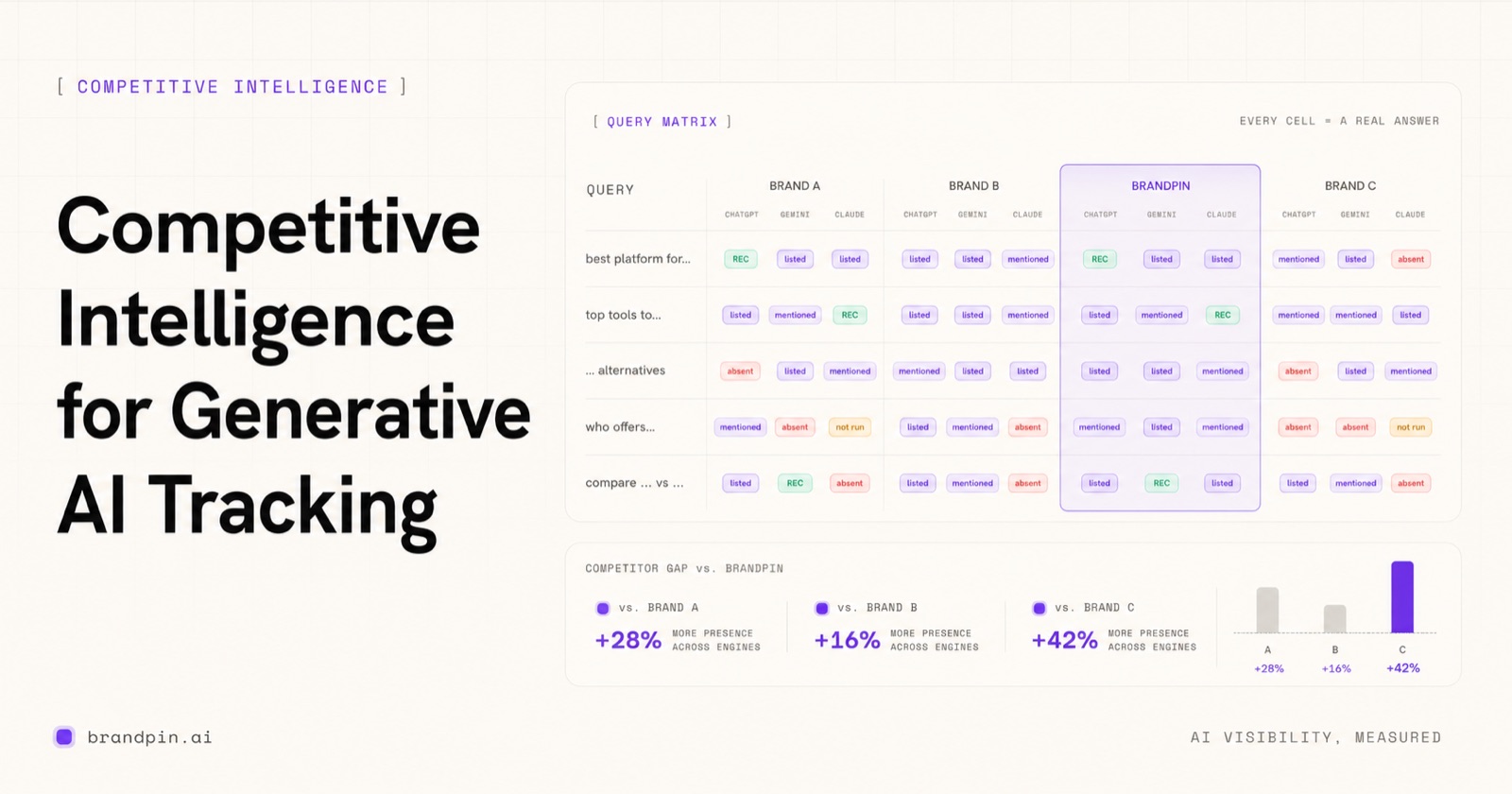
How competitive intelligence for generative AI tracking differs from social listening, and how to monitor rivals inside AI answers.
Share of Voice, Citation Rate, Model Voice: The 6 Metrics That Actually Measure AI Visibility
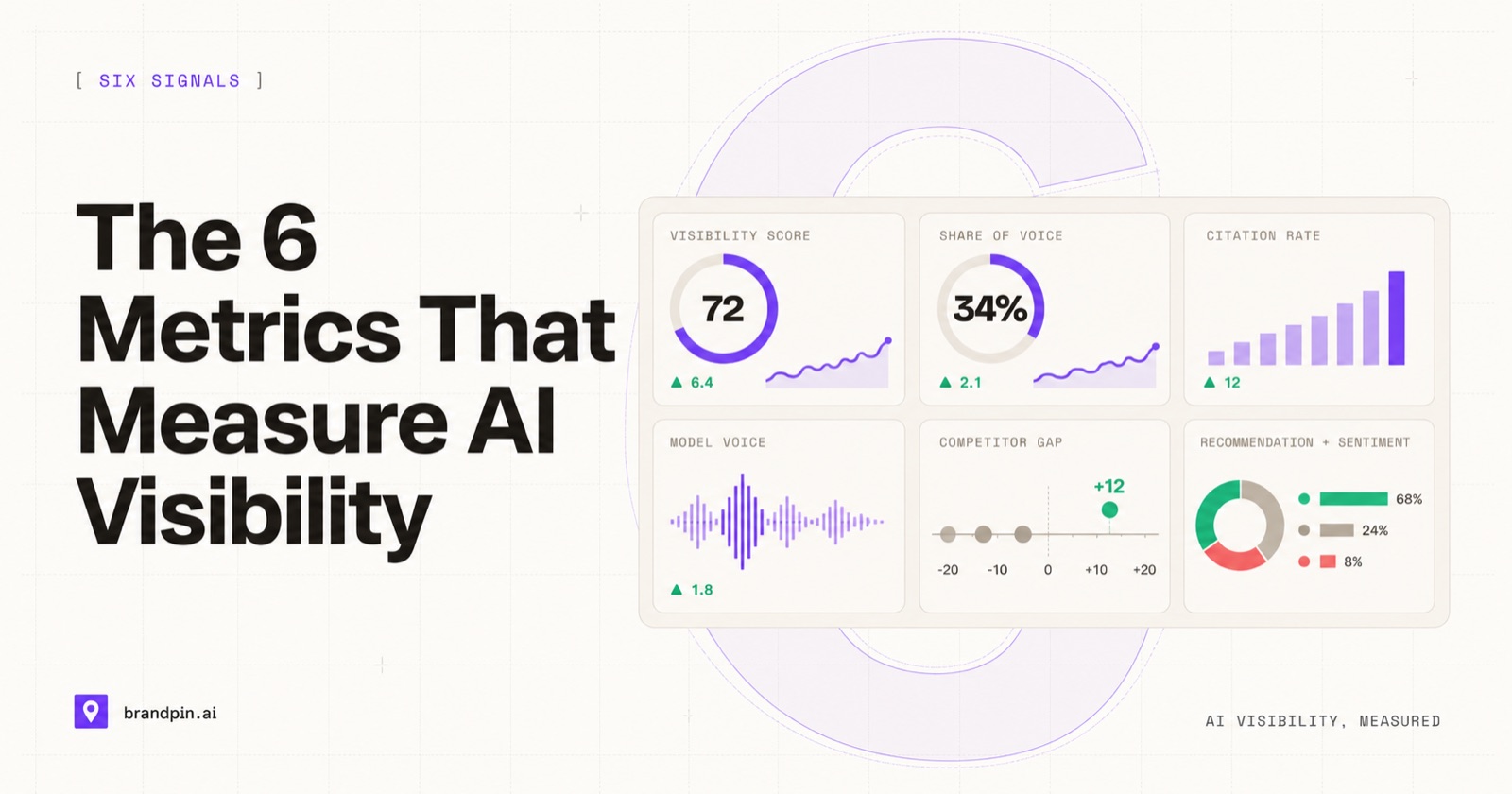
The six metrics that measure AI visibility, what each one tracks, and why a single score hides where a brand is losing.
ChatGPT vs Gemini vs Claude: How Each AI Engine Decides Which Brands to Recommend
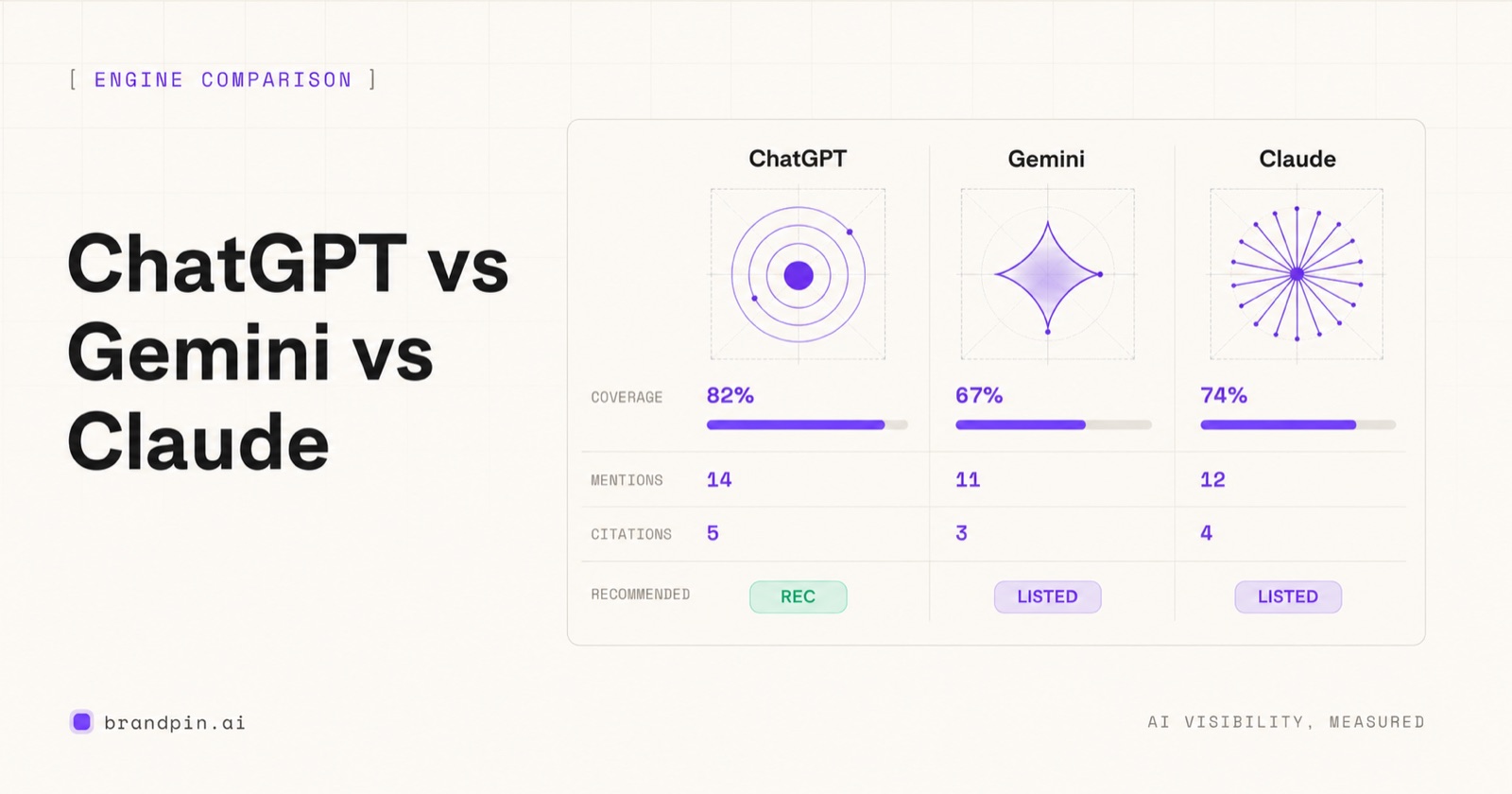
ChatGPT, Gemini and Claude build brand recommendations differently. Here is what live scans show about each engine.