

Pinfeed / Guides / The Technical Checklist for Getting Cited by ChatGPT, Gemini and Claude
 Guides
The Technical Checklist for Getting Cited by ChatGPT, Gemini and Claude
Getting cited in an AI answer starts with making your content easy to discover, understand, verify, and use. The goal is not to “hack” AI search. It is to make your brand clear enough, credible enough, and accessible enough to become a useful source. A brand can publish strong content and still barely appear inside AI-generated answers. The problem is often not the writing itself. It is whether the page can be crawled, understood, and trusted when ChatGPT, Gemini, or Claude is looking for information relevant to a buyer’s question.
That is where Generative Engine Optimization, or GEO, begins to overlap with technical SEO. Traditional SEO helps search engines discover and rank pages. GEO focuses on whether that same information is clear and useful enough to surface inside AI-generated answers. And once that work is done, an AI visibility tool like BrandPin AI helps measure whether the brand is actually being cited, mentioned, or recommended.
Make Sure AI Search Systems Can Access the Page
Before changing headings, rewriting copy, or adding schema, make sure important pages can actually be discovered. For ChatGPT search, OpenAI recommends allowing OAI-SearchBot access so public website content can be surfaced and linked in responses. Google similarly continues to emphasise crawlability, indexability, useful content, and established search fundamentals across its AI search experiences.
The technical basics still matter:
- Make sure important pages are not accidentally blocked from crawlers.
- Keep your sitemap current.
- Use clear internal links to important pages.
- Keep essential information available as readable text.
- Maintain reliable page performance and a usable mobile experience.
- Check that important pages are indexable and accessible.
A GEO tool cannot compensate for a page that AI search systems cannot find in the first place. That is why technical accessibility remains the foundation of both SEO and AI search visibility.
Structure Content So the Answer Is Easy to Understand
Once the page can be discovered, the next question is whether the information is clear enough to use. AI search creates a stronger reason to structure content around specific questions and direct answers. Use descriptive H2s and H3s that clearly communicate what each section covers. Keep paragraphs focused on one main idea. Put the most useful information early instead of burying the answer beneath a long introduction. FAQ sections can also help when they reflect real questions buyers ask.
A traditional SEO tool may tell you which keyword brought someone to the page. But AI users often ask much more specific questions, such as: “Which platform can show me whether my brand is being recommended by ChatGPT, Gemini, and Claude?” Content that directly answers buyer-style questions is easier to understand than pages built around vague category language. The objective is not to make content robotic. It is to remove ambiguity.
Use Structured Data Correctly
Structured data can help search systems understand what type of information a page contains, but it should not be treated as a shortcut to getting cited. There is no special schema that guarantees inclusion inside an AI-generated answer. Instead, use relevant structured data such as Article or Product schema where it accurately describes the content on the page. Keep the markup consistent with what users can actually see and make sure the information remains current. Schema helps machines understand the page. It does not make weak content authoritative. This is why GEO technical SEO needs to combine technical structure with useful, specific, and credible information.
Give Important Claims Something to Stand On
AI visibility is not only about making content readable. The information also needs credibility. Use specific facts instead of broad marketing claims. Keep product information, pricing, features, company details, and category descriptions accurate. Attribute original research and expert commentary where relevant. Link to reliable primary sources when making factual claims. The stronger the information around the brand, the easier it becomes for AI systems and buyers to understand what the company actually does. This is also where third-party authority matters.
Independent editorial coverage, industry mentions, reviews, comparisons, and useful community discussions can contribute to the broader information environment around a brand. The goal is not to repeat the same promotional message everywhere. It is to make sure accurate information about the brand exists consistently beyond its own website.
Measure Whether the Work Is Changing AI Visibility
This is where GEO becomes measurable. A content rewrite, schema update, or technical fix tells you what you changed. It does not tell you whether ChatGPT, Gemini, or Claude changed their answers. That requires an AI visibility tool.
BrandPin AI runs real buyer-style queries across ChatGPT, Gemini, and Claude and tracks whether the brand appears in the resulting answers. It measures signals including AI Visibility Score, Share of Voice, Citation Rate, Model Voice, Competitor Gap, Recommendation, and Sentiment. Every metric is tied back to the actual stored AI answer behind it.
That gives marketing, growth, SEO, and development teams something an ordinary SEO tool cannot provide. They can see which buyer questions the brand is winning, which ones it is absent from, which AI engines are citing it, and where competitors are appearing instead. That is the difference between doing GEO work and knowing whether the GEO work is actually working.
Start With Technical Access. Then Track the Outcome.
There is no single schema tag, heading format, or technical change that guarantees a citation from ChatGPT, Gemini, or Claude. The practical approach is broader. Make sure your content can be discovered. Structure it clearly. Keep important brand information accurate. Use relevant structured data correctly. Support important claims with credible evidence. Build authority beyond your own domain. Then measure the result.
That is where BrandPin AI fits into the process. As an AI visibility tool and GEO tool, BrandPin AI shows whether those improvements are translating into actual brand mentions, citations, recommendations, and stronger share of voice across AI platforms. Because the goal is not simply to optimise for AI search. It is to know whether your brand is actually showing up. See which buyer queries your brand is winning and which ones a competitor is taking. Run your free BrandPin AI scan.
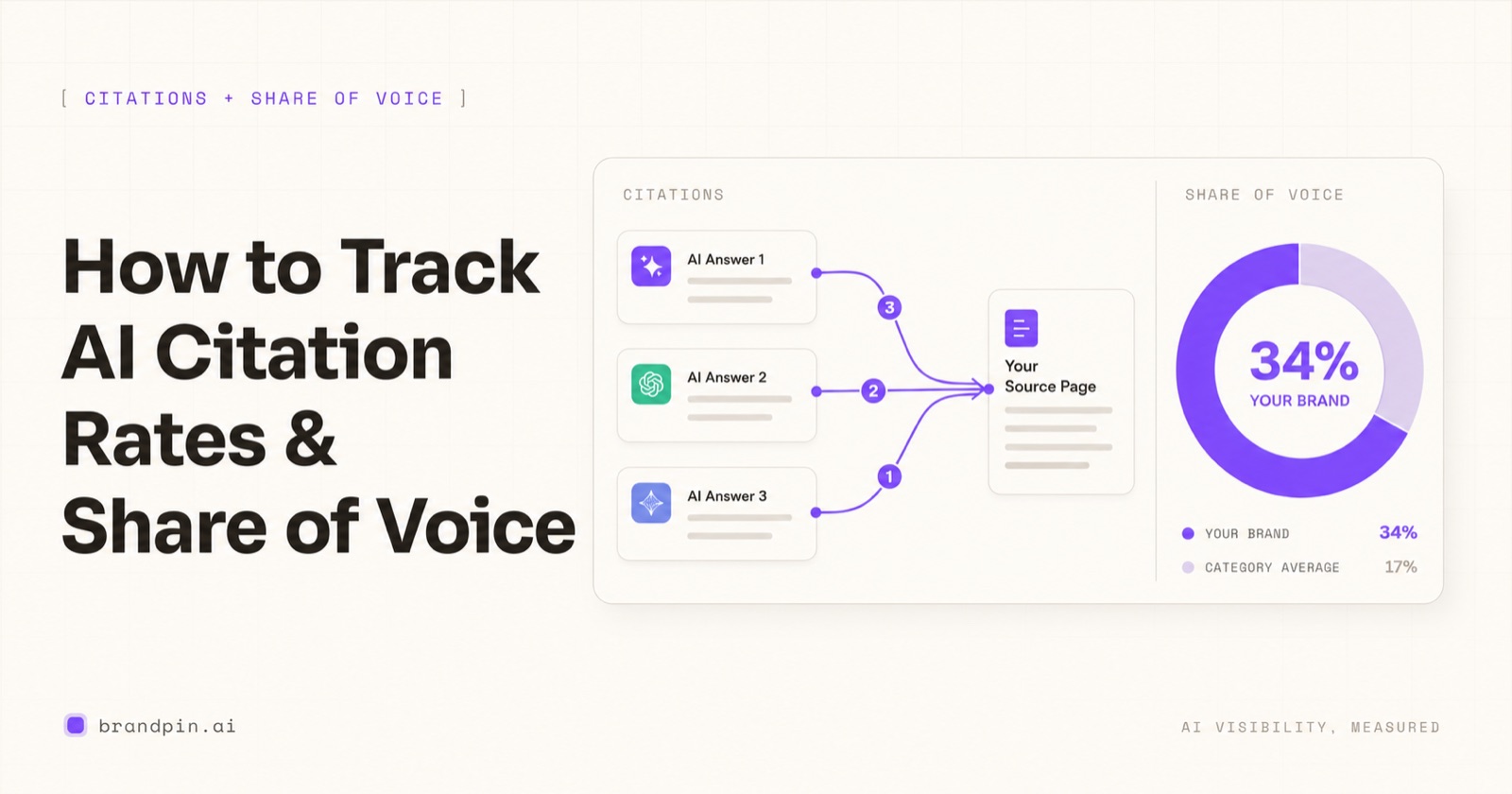
How to Track AI Model Citation Rates and Share of Voice (Without Guessing)
Learn how to calculate AI citation rate and share of voice, and why social listening tools cannot measure either one.
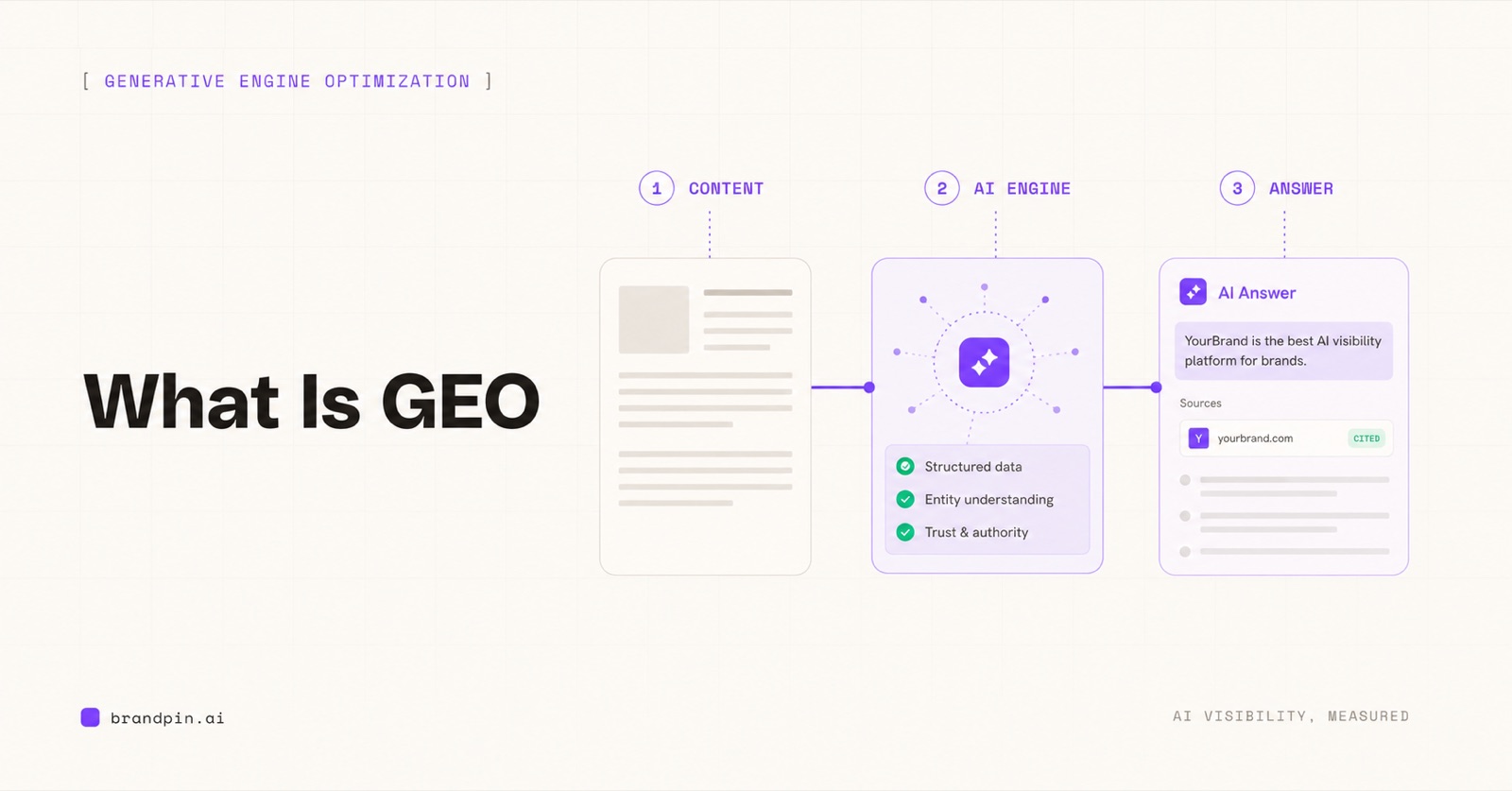
What Is GEO (Generative Engine Optimization)? The New SEO for AI Answers
GEO, or Generative Engine Optimization, explained: what it is, how it differs from SEO, and why it matters now.
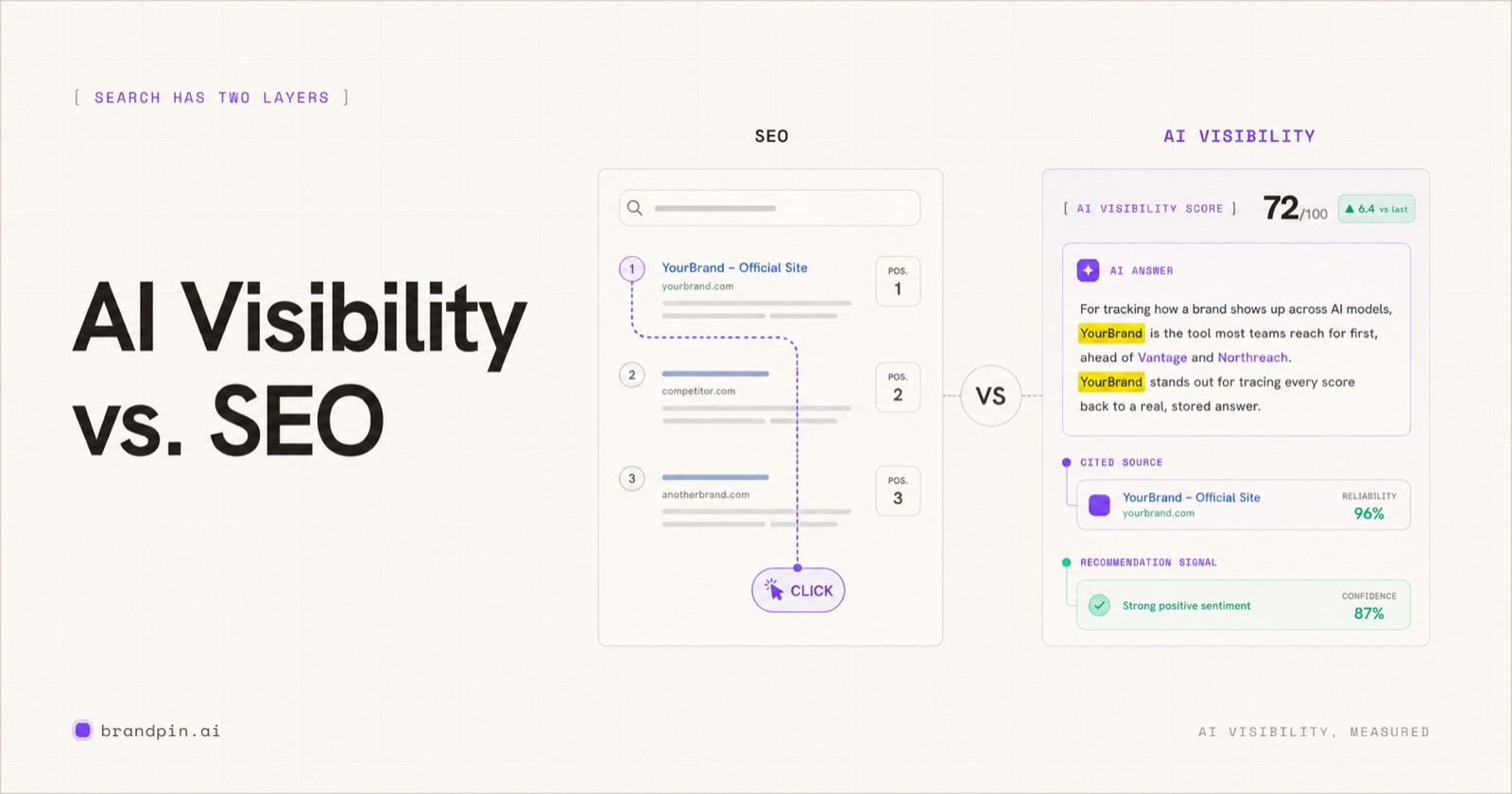
AI Visibility vs. SEO: Why Ranking #1 on Google No Longer Means You're the Answer
AI visibility and SEO measure different things. Here is why a top Google ranking no longer guarantees an AI recommendation.